● ZAGREB, HRVATSKA · TIHANA KLEPAČ
Talk Time: Learn Croatian with a Cultural Twist.
Teachers Learning Languages with Tihana Klepač
 by: Tihana Klepač Published on: 11/11/2026
Katarzyna Ciszewska talks with Tihana Klepač, Associate Professor at the University of Zagreb, about learning languages as an adult, the shame heritage speakers carry, and how Talk Time Croatian teaches Croatian through culture. With transcript.
The Lost Ending: Re-discovering Your Name in Croatian
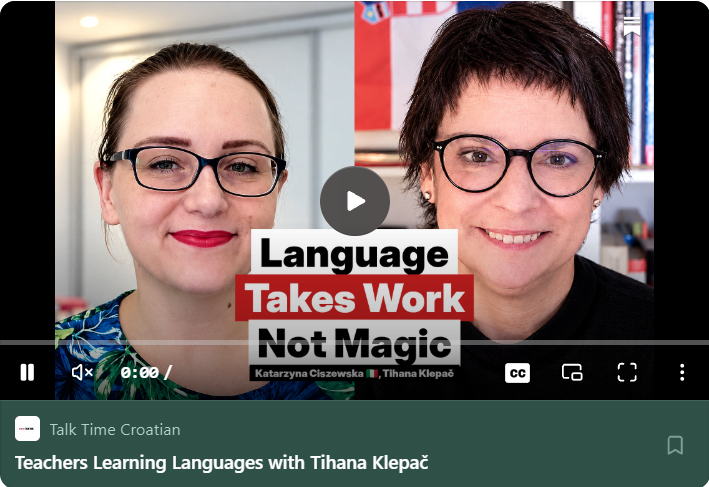
by: Tihana Klepač Published on: 08/11/2026Croatian has a case that exists only for calling someone by name. Learn why your surname lost its hooks, what really happened at Ellis Island, and how to find and say your own vocative.
Tihana Klepač on Heritage Croatian, Dialect and the Shame of Gaps: The Strategic Linguist Interview
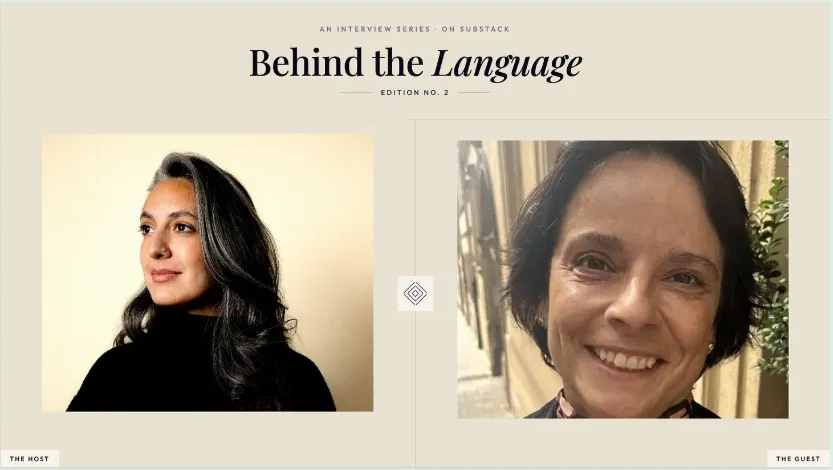
by: Tihana Klepač Published on: 03/11/2026Tihana Klepač, founder of Talk Time, tells Rebecca Wicker of The Strategic Linguist why heritage speakers understand Croatian but struggle to speak it, how standard Croatian was chosen over dialects, and why learners feel ashamed.
Can You Learn Croatian from Songs? What the Research Says
by: Tihana Klepač Published on: 29/10/2026Songs give you whole Croatian phrases, but no extra help with meaning and no reliable accent. What the research shows, and a six-step method.
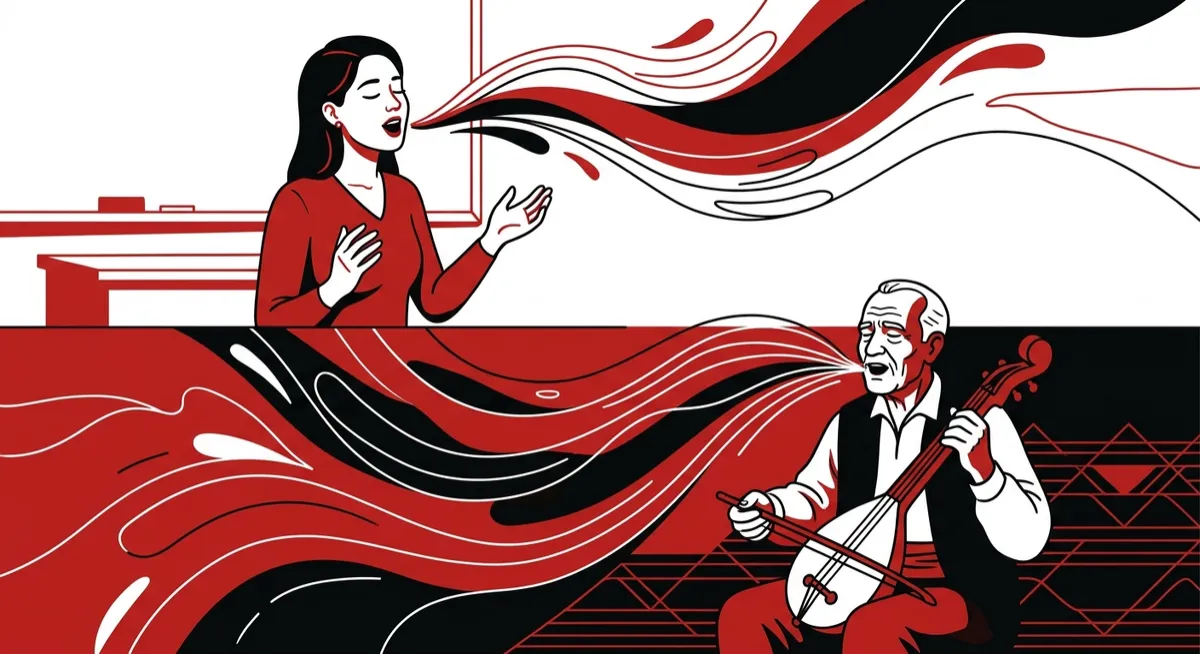
Croatian Cases Explained: How to Learn All Seven as a Heritage Speaker
by: Tihana Klepač Published on: 21/10/2026Why are Croatian cases so hard? A Zagreb linguist explains why English once had cases too, why you already use them every day, and the order in which heritage speakers should actually learn all seven.
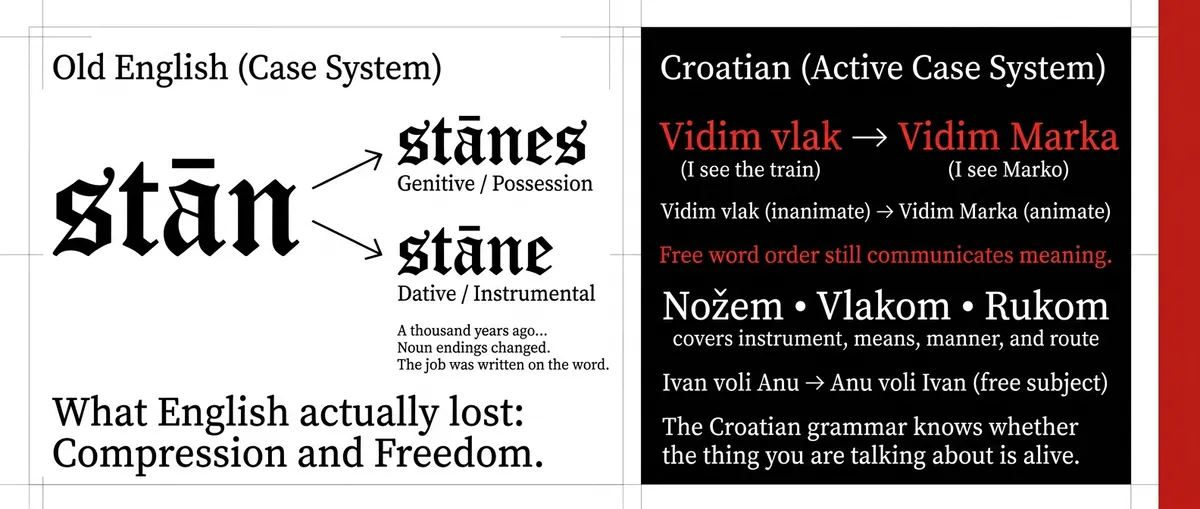
I Understand Croatian but Can’t Speak It. Here’s Why.
by: Tihana Klepač Published on: 17/10/2026You understand Croatian but freeze when you have to speak? It isn't laziness or a bad memory. A linguist explains the gap, and how to close it.
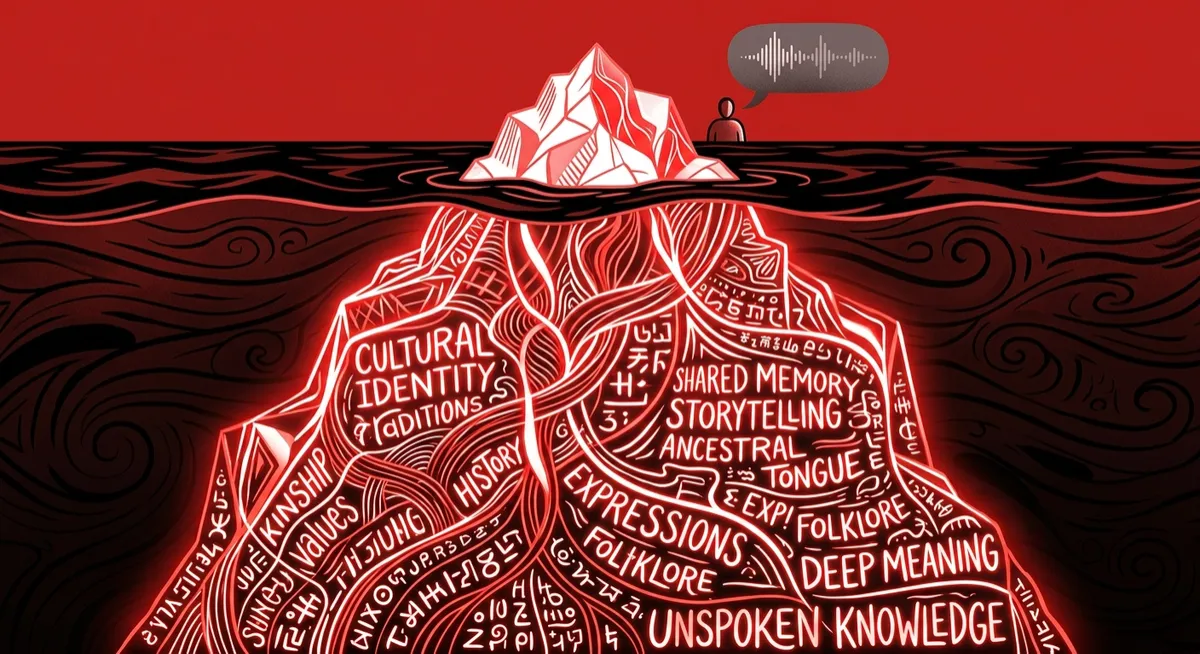
Znači, Ono, Budimo Realni: Two Evenings of My Croatian, Unscripted
by: Tihana Klepač Published on: 16/10/2026Two old recordings of me speaking unscripted Croatian, at a Zagreb bookshop and on a theatre stage. Why your own hesitation is not proof you have failed, and what a heritage speaker’s ear can learn by listening to mine.
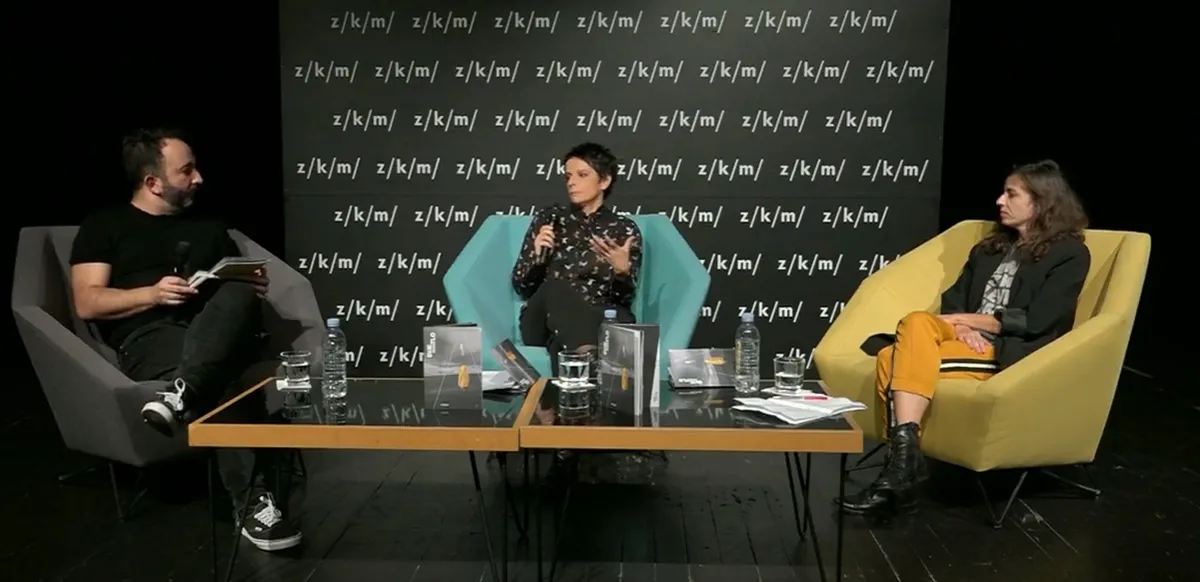
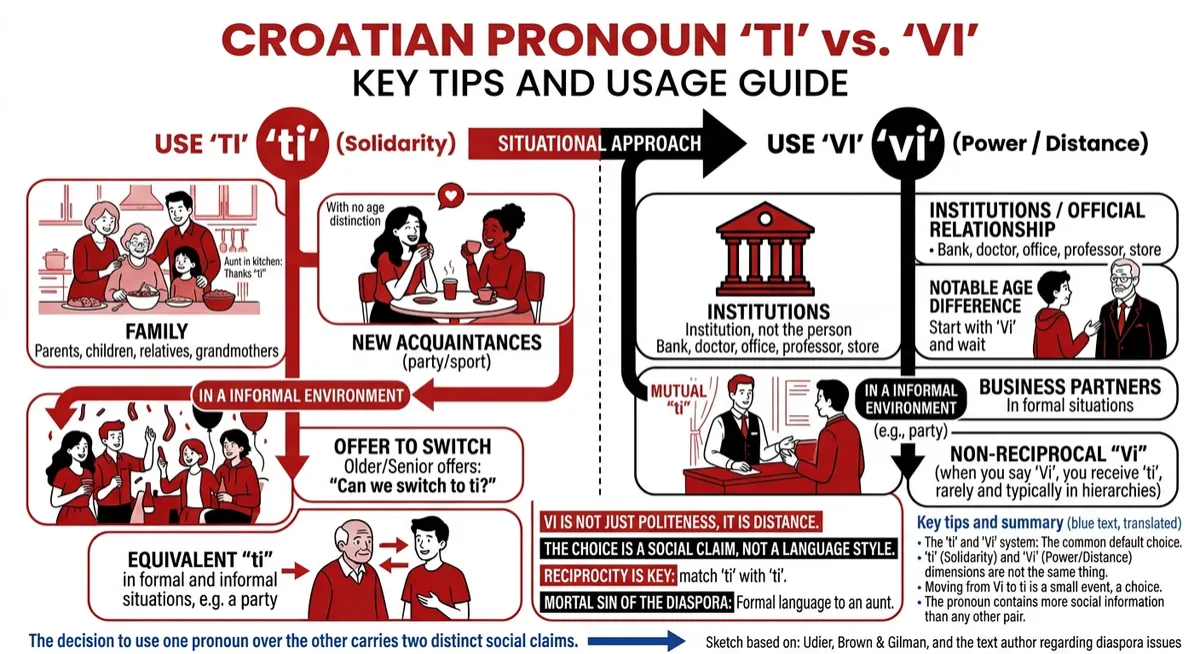
Ti or Vi?
by: Tihana Klepač Published on: 13/10/2026Why English speakers get ti and Vi backwards in Croatian, and why the polite mistake sounds cold to family. Learn what Brown and Gilman and Udier found, and how heritage speakers can choose the right one at a Croatian table.
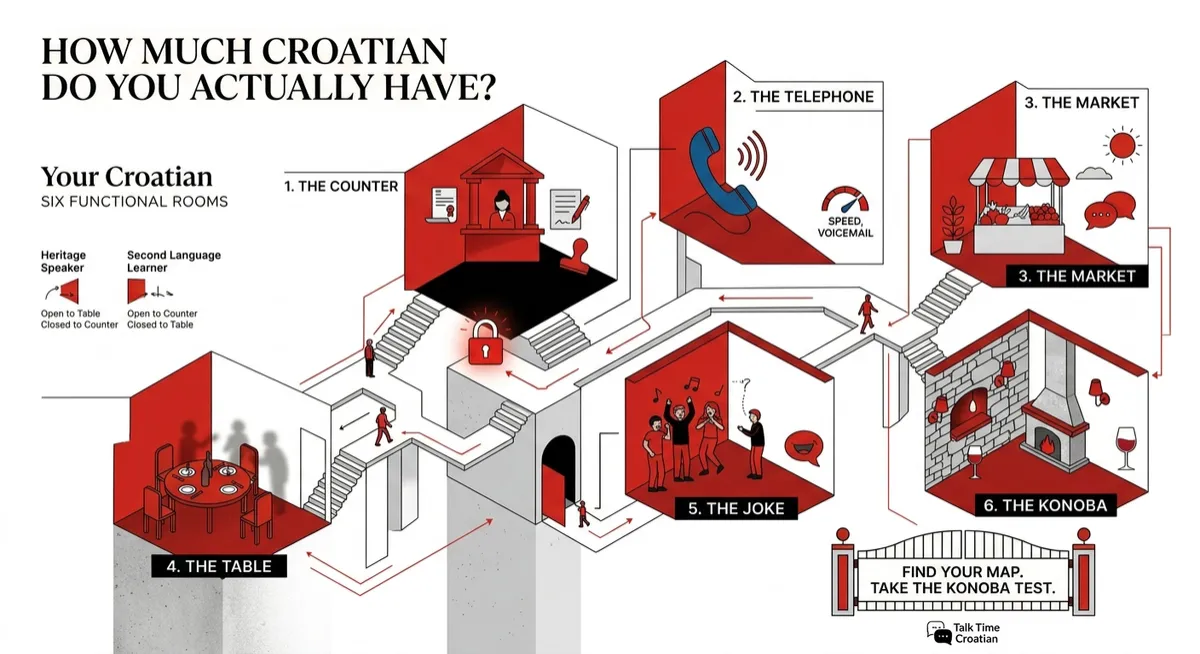
How Much Croatian Do You Actually Have? A Level Cannot Tell You
by: Tihana Klepač Published on: 06/10/2026Your Croatian level is a single word for six very different abilities. Here is a map of the six rooms every heritage speaker actually stands in front of.
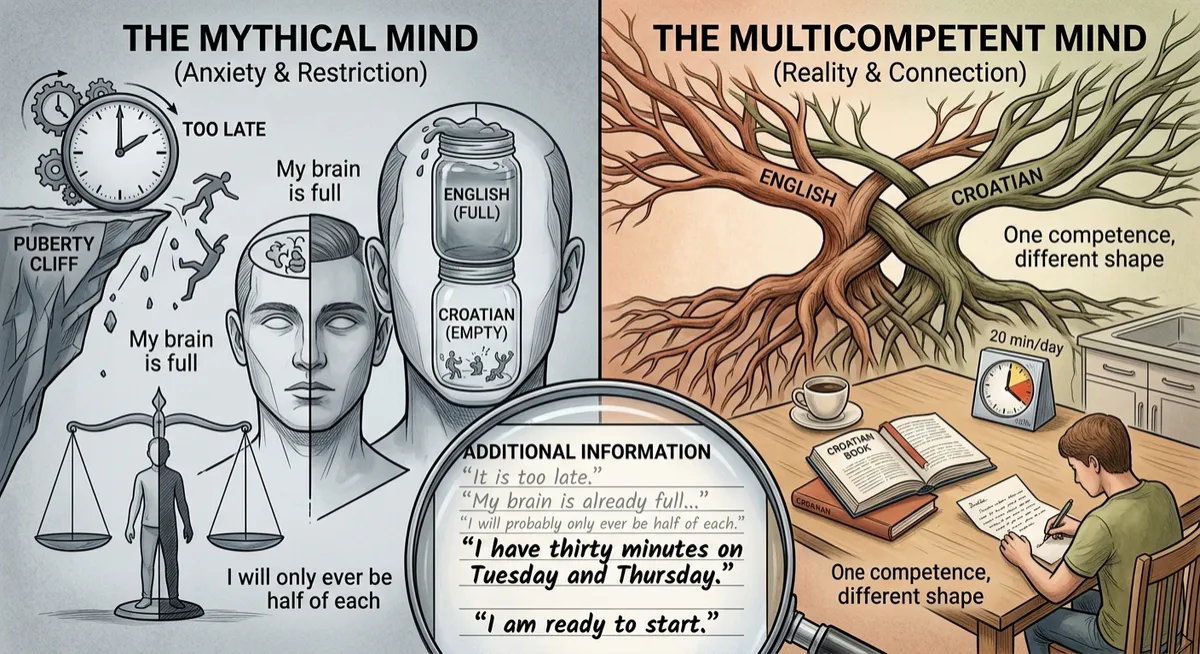
Is It Too Late to Learn Croatian? The Bilingual Brain Does Not Keep Score
by: Tihana Klepač Published on: 02/10/2026Adults often think it is too late to learn Croatian, that their brain is full, or that they will only ever be half a speaker. Here is what the research says about each.