Tihana Klepač on Heritage Croatian, Dialect and the Shame of Gaps: The Strategic Linguist Interview
A student walks into my office and speaks in dialect, Kajkavian vowels or a Čakavian rhythm, and before I have registered a single thing about what she actually knows, I have already decided something about her.
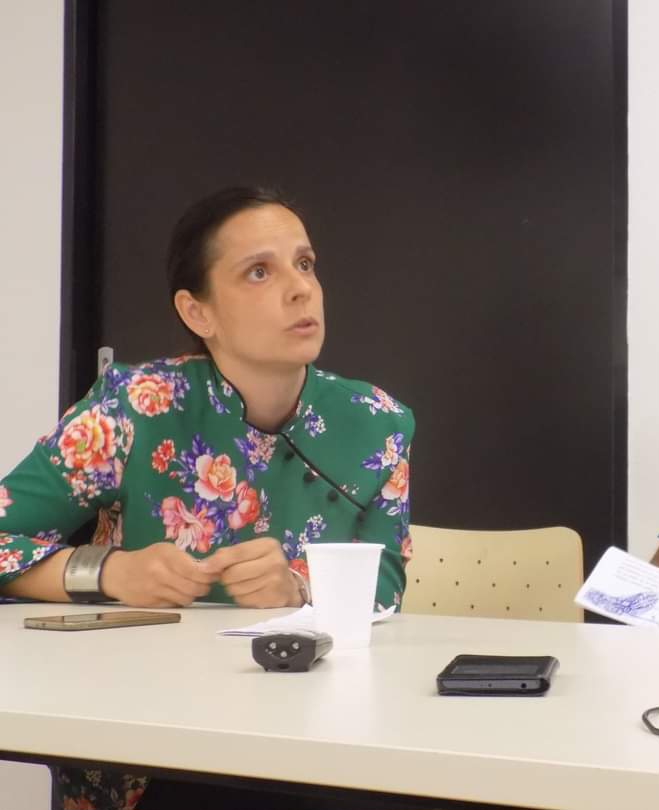
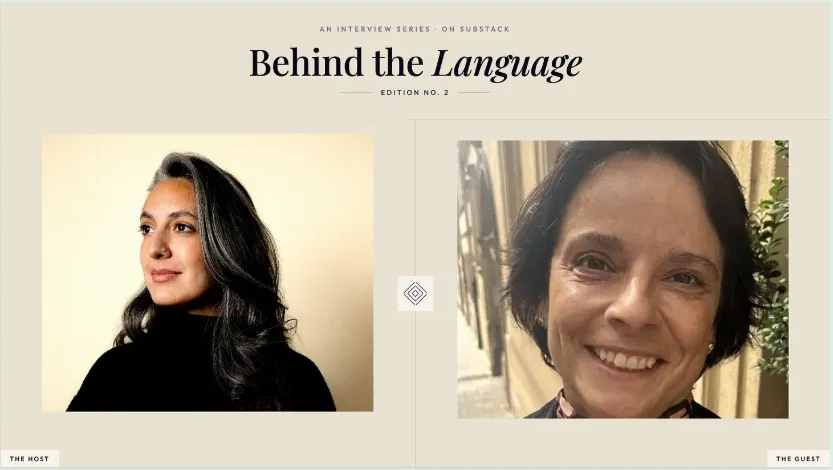
I said exactly this in July, in an interview with Rebecca Wicker for Behind The Language, her series on The Strategic Linguist, where she asked me ten questions about language and identity. Three of my answers are the ones my students recognise themselves in, so I am putting them here.
Why do heritage speakers understand Croatian but struggle to speak it?
Linguists call it the production-comprehension divide, and Maria Polinsky gives it a whole section of her work on heritage languages, because the gap is so consistent. A child who grows up hearing Croatian absorbs a great deal, correctly and for good, and is almost never asked to produce it under pressure. In adulthood the receptive system runs years ahead of the productive one. Heritage speakers often hear the difference between two words that differ only in pitch or length long after they can no longer produce it. The honest version is that both systems are underdeveloped compared with a monolingual speaker, just by very different amounts. The space between those two amounts is where the feeling lives, of understanding more than you can say.
Is standard Croatian simply how Croatians speak?
It was a choice, and I can show you where it was made. In the nineteenth century the Illyrian movement needed one Croatian to build a nation around, and they chose Štokavian, the variety spoken across the widest territory, over Kajkavian, the speech of Zagreb and the north, and Čakavian, the speech of the coast and the islands. I grew up in Opatija speaking Čakavian, so I have always lived on the wrong side of that decision.
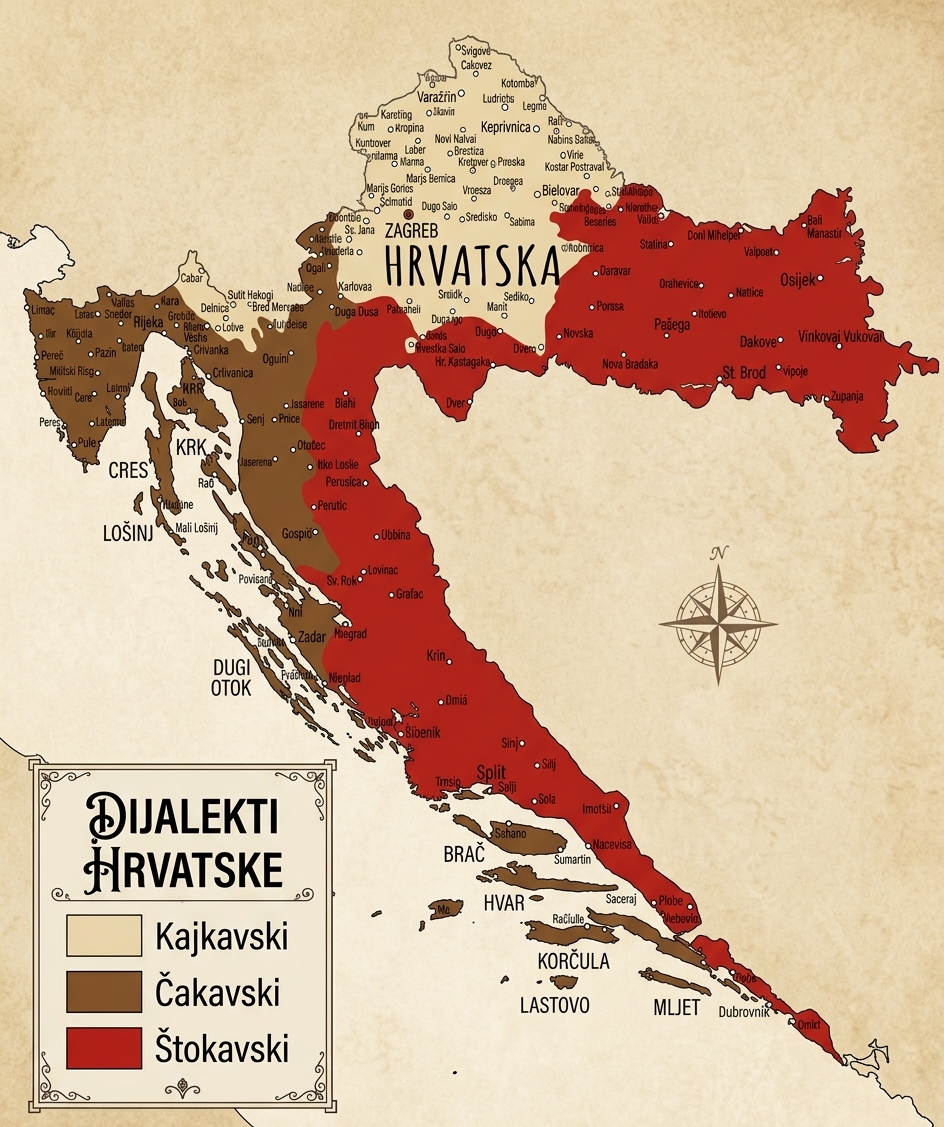
It had real logic behind it, unification and visibility among them. Nobody voted on what came after. Two older, fully formed languages quietly lost their claim to sound like educated Croatian, and the choice hardened into common sense. That is the reflex I catch in my own office, every time I can, and I make myself listen past it to what the person is saying. If it survives in me after twenty-odd years of studying precisely this mechanism, it will survive in anyone.
Why do adults feel ashamed of the gaps in their Croatian?
Nobody blushes over their terrible Portuguese. The shame arrives when the gap is in the language your grandmother spoke to you, because then the error stops reading as a skill you have not built yet and starts reading as evidence about who you are allowed to be.

In Life in a New Language, Ingrid Piller and her co-authors describe a young woman, Yumiko, newly arrived from Japan, who spent her first months on the Gold Coast drinking orange juice she did not want. Her accent made the word for apple juice land wrong, and the waitresses could not place it. She was a competent adult who knew exactly what she wanted to drink. What broke was the ordinary act of being understood, and once that breaks, a person edits herself down to whatever is safe to say.
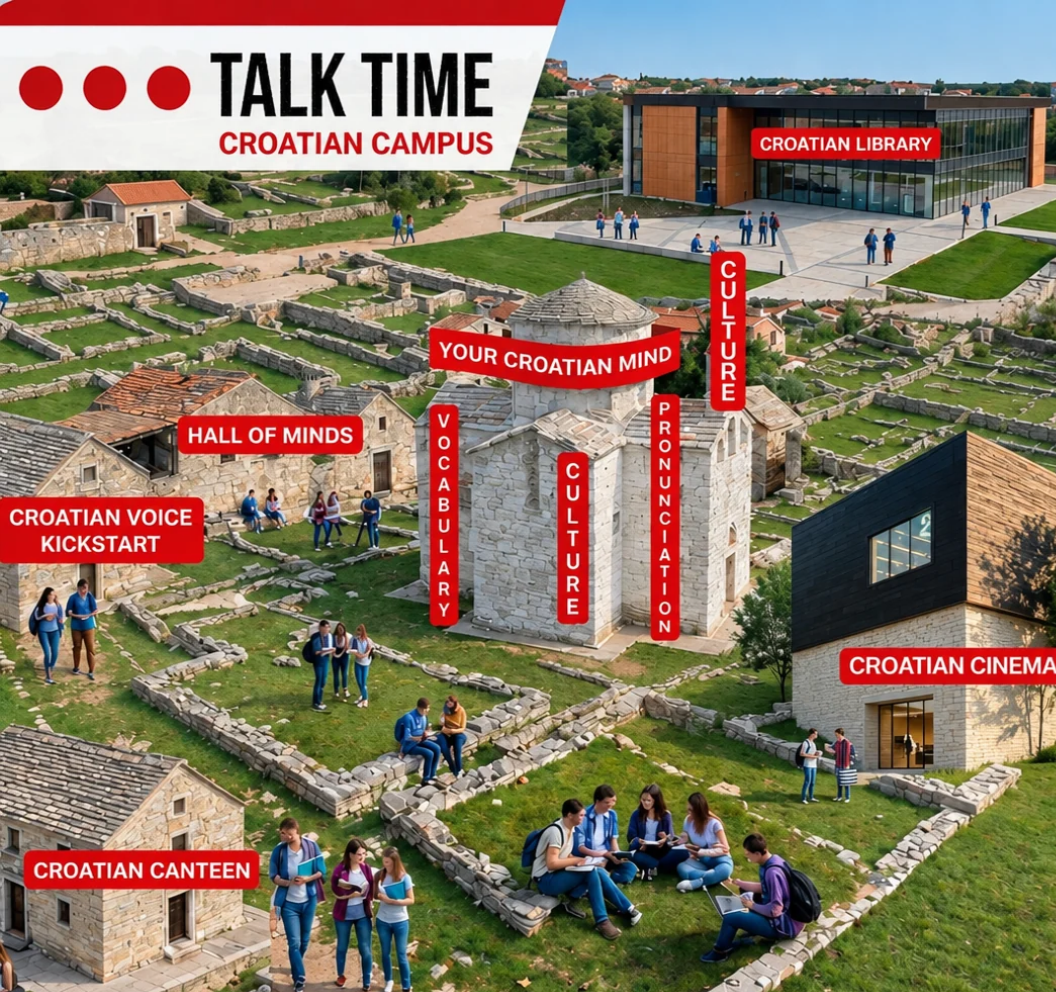
This summer, when my classes paused, the group I teach kept meeting on their own, in the Croatian Library inside our online campus, choosing something to read and talking about it in Croatian, correcting each other gently and laughing at their own mistakes. Nobody was grading them.
If you have ever ordered the orange juice, I would like to hear about it.
The full conversation, all ten questions, is here: Behind The Language: Talk Time Croatian, The Strategic Linguist. If you want to learn Croatian with me, you can start at Talk Time.
Tihana Klepač is an Associate Professor in the Department of English at the Faculty of Humanities and Social Sciences, University of Zagreb, with about twenty years of teaching experience. She is the founder of TalkTime Croatian, where she teaches Croatian to heritage speakers and diaspora learners through grammar, vocabulary, pronunciation and culture.
She writes the free weekly Saturday Letter from Zagreb and hosts the slow-Croatian podcast Ćakula Café and a YouTube channel Talk Time: Learn Croatian With a Cultural Twist.
Keep learning Croatian with Tihana
Start here, free
Learn Croatian: Where to Start— How I teach, and which programme to start with.
The Free Masterclass— An introduction to the 4-Pillar Method and the logic of Croatian grammar.
The Konoba Test— A short quiz on where you are actually standing in Croatian.
Saturday Letter from Zagreb— A weekly essay on language, culture and belonging, free in your inbox.
Listen and watch
Ćakula Café podcast, on Spotify— Slow Croatian for heritage speakers and diaspora adults at A2–B1.
Ćakula Café, on Apple Podcasts— The same podcast, for listeners on iPhone and Mac.
Ćakula Café, on Castbox— The same podcast, for listeners who prefer Castbox.
TALK TIME on YouTube— Free Croatian lessons and films, with cultural context.
Podcast episodes on Substack— Audio companions to the Saturday Letters.
Courses and books
Croatian Entry Point— A1 self-study: eight weeks of culture-driven lessons, lifetime access.
The Croatian Quadrant™— A1–A2 flagship live programme, one cohort a year; join the waitlist.
Level Up Croatian— A2 self-study: daily fifteen-minute lessons in weekly themes.
Short Stories in Croatian— Ebook for A2–B1: nine original stories with audio, glossary and grammar notes.
Croatian Nexus— Post-A2 live seminars: where the language becomes literature.
More Saturday Letters
The Silence Between Generations— What is lost when a language is not passed on, and what can still be recovered.
Coming Home in a Language You Half Remember— The returnee's wall at the counter, and why the language is closer than you think.
Inat— The word your grandfather lived by, and where it came from.
The Word That Will Not Cross— Why čežnja is not longing and fjaka is not laziness.
Does Croatian Make You Think Differently?— What is real, and what is beautiful nonsense, in the idea that a language shapes a mind.
The Kitchen Was a Language Policy— Why Croatian was, or was not, passed down to you.
What English Does to Your Croatian While You Sleep— Why your grandmother's Croatian did not stay frozen the day she left.
Why You Feel Like a Different Person in Croatian— Why volim te weighs more than I love you.
You Are Not a Tourist in Your Own Language— The emotional case for coming home one register at a time.
The Konoba Test: Where Are You Actually Standing?— Why "what level is my Croatian" is the wrong question.
The Small Words That Give You Away— Why flawless Croatian can still mark you as a stranger: pa, ma, daj and the third rakija.
The Country Inside the Word Kaj— How the old language of the north became a place you carry.
Slavonia: The Gateway Dialect— The oldest Croatian štokavian is hiding in the east.
Who Gets to Tell the Story— Postcolonial theory, a nineteenth-century pamphlet and your grandmother's Croatian.
Tihana as a scholar: interviews in Croatian
Tribina „Čitanje kazališta“ before the premiere of Svjetlo pada (Zagreb Youth Theatre)— Tihana on British drama, in Croatian, at Zagrebačko kazalište mladih.
Tko se boji Virginie Woolf? (mi)— Tihana on Virginia Woolf, in Croatian, with Bookaravision.
Roald Dahl, autor scenarija za Hitchcocka a da to niste znali— Tihana on Roald Dahl, in Croatian, with Bookaravision.
Press and reviews
Behind the Language: Talk Time Croatian— Interview with Tihana Klepač by Rebecca Wicker, The Strategic Linguist, July 2026.
Student reviews on Google— What learners say about studying with Tihana.