Znači, Ono, Budimo Realni: Two Evenings of My Croatian, Unscripted
These two recordings are three years old. They have been on YouTube all this time, and I never thought of them as something for you. My students know me from class, where I speak a slow and careful Croatian with every ending in its place, because there that is my job. They have never heard me the way Croatians hear me, at a table in a bookshop or on a theatre stage, thinking out loud and slowing down for nobody. This autumn I went back to both recordings and wrote them down, sentence by sentence. I want to tell you what I heard, because it surprised me.
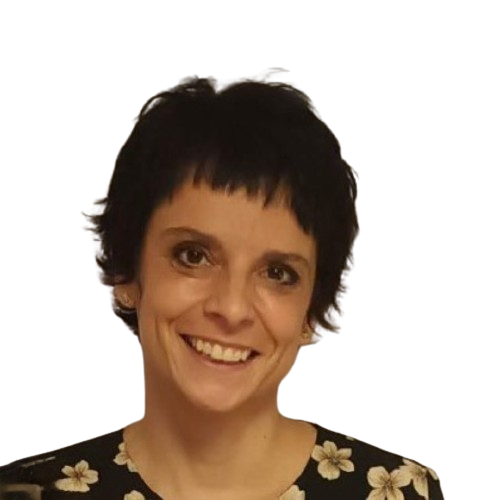
I heard znači. Over and over. Znači means “so”, or “that means”, and in my mouth it means almost nothing, it is the small sound I make while the next thought is still on its way. I heard ono, and recimo, and budimo realni, let’s be realistic, which I seem to say exactly when I am about to say something not very realistic at all. I heard kak where the dictionary wants kako, and that one needs a word of explanation. I was born and raised in Opatija, among Čakavian speakers, by a mother and father from Zagreb who brought their Zagreb speech with them. I have moved between those two my whole life, Čakavian in the town and Zagreb at home, and neither of them is the standard. I heard English slip in when a Croatian word did not arrive fast enough. A professor from the University of Zagreb, on a stage, with a microphone, in front of an audience, and hardly one paragraph of textbook Croatian.
I wrote about this in Nobody Speaks Standard Croatian. Not Even in Zagreb. Now you can hear it.
This matters for you because so many of you measure yourselves against a Croatian that nobody speaks. You hear your own ono and your own hesitation and you think it is proof that you are not good enough. Listen to me hesitate for an hour. Listen to me lose a word, find it, lose the thread, come back to it. This is what educated Croatian sounds like when a person is thinking out loud.
There is a second reason. In Maria Polinsky’s research on heritage speakers, the ear runs ahead of the mouth: you understand far more than you can produce. Your ear is the part of your Croatian that is already working, so feed it. Feed it with something you already know. In my experience, when the story is familiar, the attention that was busy with the story is free for the language. You know Matilda. You know Charlie and the Chocolate Factory. You know what a theatre premiere feels like. Let the content be the safe ground under your feet, and let the Croatian come at you.
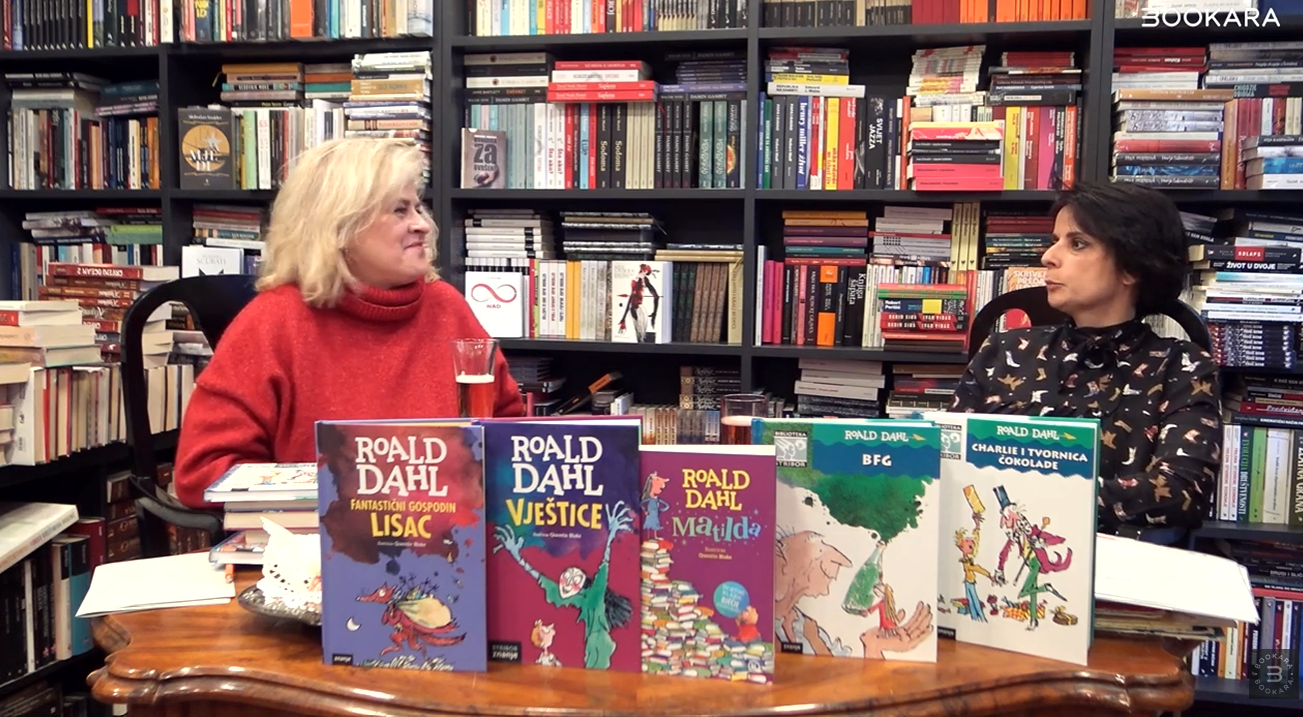
Roald Dahl, autor scenarija za Hitchcocka a da to niste znali was recorded at Bookara, a bookshop in Zagreb, for Bookaravision, its YouTube channel. It was the first of their Saturday talks, held for Noć knjige, Book Night, and the conversation is about Roald Dahl. We talk about The Witches and the grandmother who listens to her grandson, about Matilda as a girl who reads in a time when girls were not encouraged to, about Willy Wonka and the Oompa-Loompas. My son was given that book as school reading in sixth grade, and nobody in the classroom said a word about how they are described. Towards the end we arrive at the Dahl almost nobody in Croatia knows, the spy, the pilot, the writer of Tales of the Unexpected and of stories Hitchcock brought to the screen.
Listen for the moment I complain that Croatian has no proper word for representation. When Sanja Rojić translated Edward Said’s Orientalism, she used reprezentacija, with a long footnote, because we simply do not have the word. A language names what its people needed to name, and sometimes you can hear the gap. Listen also for the laughter when I say osjećam se vrlo eventualno. In Croatian, eventualno does not mean “eventually”. It means “possibly, maybe, if it comes to that”, and the sentence is a famous slip that every Croatian in the room recognised at once. If you have ever used eventualno to mean “in the end”, you are in very good company, and now you know why the audience laughed.
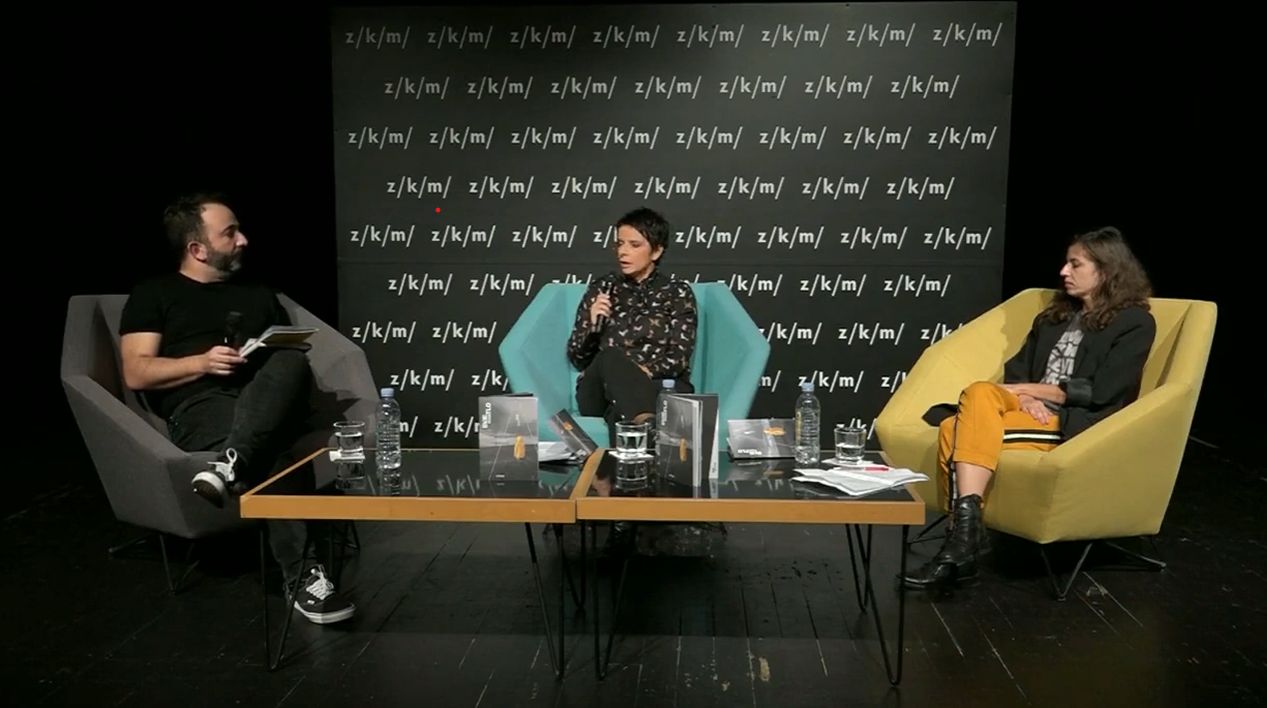
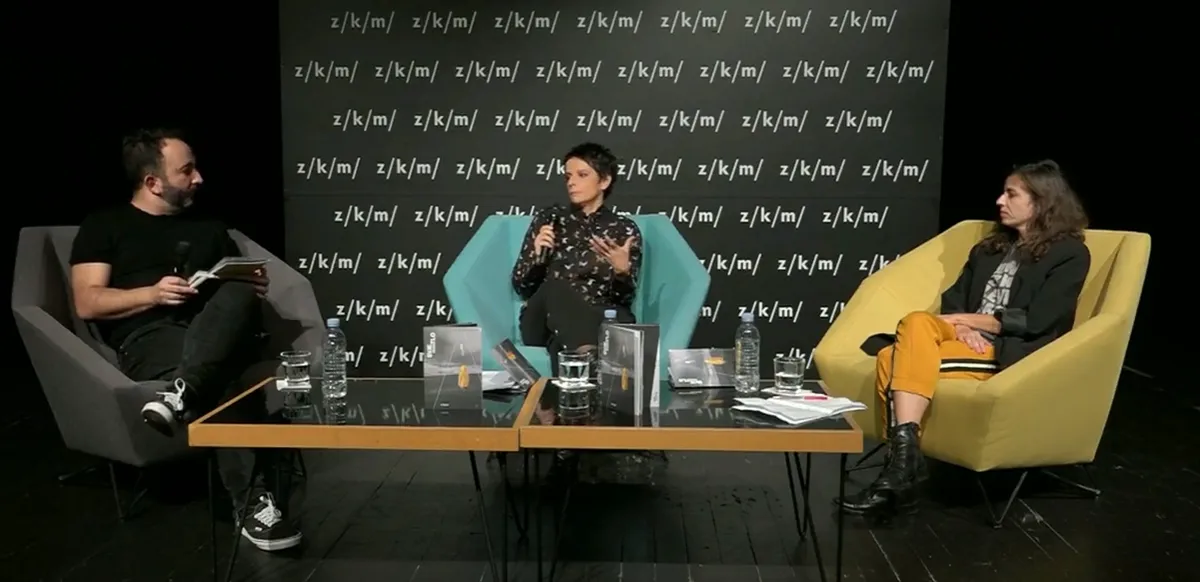
Tribina „Čitanje kazališta” before the premiere of Svjetlo pada is a different room and a different register. Zagrebačko kazalište mladih, the evening before the premiere of Simon Stephens’s Light Falls, Svjetlo pada, directed by Janusz Kica. I am there with the dramaturg Vedrana Klepica, and Srđan Sandić leads the conversation. My job is the context: Cool Britannia and New Labour in the nineties, the generation that grew up in Thatcher’s eighties and was promised an education and a future that the economy could not give, and the English north, from the Brontës and Elizabeth Gaskell to Ted Hughes and Jeanette Winterson, a place the English have been building in literature for two hundred years.
The first minutes are a gift for a learner, because the microphone does not work. Radi, ne radi, radi, ne radi. Works, doesn’t work. Start there, with the easiest Croatian in the recording, and then let it carry you further. Listen for Vedrana explaining the English word playwright, that a wright is a maker, someone who shapes, like a wheelwright, and that a playwright builds a play more than he writes it. It is a Croatian sentence explaining an English word, and for those of you who live between these two languages, it is a small pleasure to hear both of them working at once. Listen too for my story about teaching Edward Bond’s Saved to my students, and how hard it was to make them feel how shocking that play was in the 1960s.
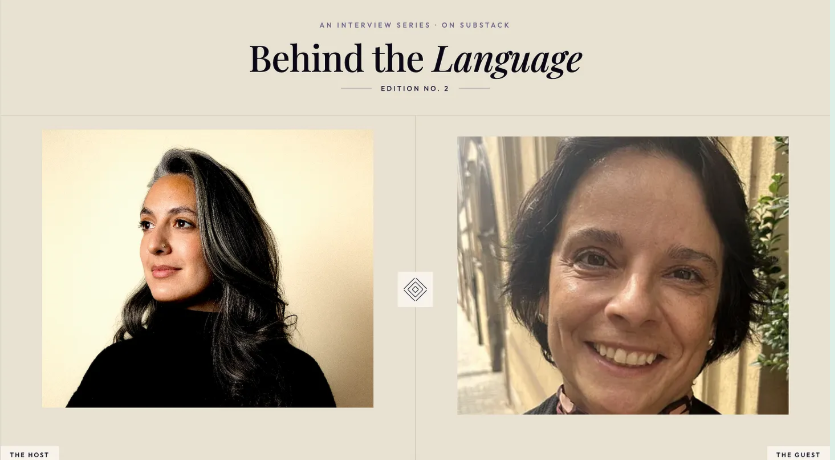
If you would rather meet me in English first, Rebecca Wicker interviewed me for Behind the Language on The Strategic Linguist. There I talk about my parents, about New Year’s 1994 with Croatians in Detroit, and about language as the border between being understood and being let in. It is the same person you will hear in the two recordings, only in the other language, and a little slower.
And if you want to know what it is like to learn with me, my students have said it better than I can.
“Very quickly, it feels like a place to be yourself, ask your questions, and really have a good time while learning.” Joan
“I have not come across another course in which I am able to learn about both the culture of Croatia and the language.” Heather
“My fellow students and I and Tihana have built up a friendship that has transcended the actual weeks of the course… Another result is that we have not stopped learning.” Cathe
You can read the rest of what they wrote on Google.
So here is what I would ask of you. Choose one of the two recordings. Press play, and do not stop it when you lose a word. Let a whole minute go by in which you understand only half, and notice that the half you understand is more than you expected. Then come back to the same minute next week, and listen again.
And if the talks run too fast for you today, start slower, with Ćakula Café, and come back to them later.
Keep learning Croatian with Tihana
Listen and watch
Ćakula Café podcast, on Spotify — Slow Croatian for heritage speakers and diaspora adults at A2–B1.
Ćakula Café, on Apple Podcasts — The same podcast, for listeners on iPhone and Mac.
Ćakula Café, on Castbox — The same podcast, for listeners who prefer Castbox.
TALK TIME on YouTube — Free Croatian lessons and films, with cultural context.
Podcast episodes on Substack — Audio companions to the Saturday Letters.
Start here, free
Learn Croatian: Where to Start — A beginner’s orientation for adults learning Croatian.
The Free Masterclass — An introduction to the 4-Pillar Method and the logic of Croatian grammar.
The Konoba Test — A short quiz on where you are actually standing in Croatian.
Saturday Letter from Zagreb — A weekly essay on language, culture and belonging, free in your inbox.
Courses and books
Croatian Entry Point — A1 self-study: eight weeks of culture-driven lessons, lifetime access.
The Croatian Quadrant™ — A1–A2 flagship live programme, one cohort a year; join the waitlist.
Level Up Croatian — A2 self-study: daily fifteen-minute lessons in weekly themes.
Short Stories in Croatian — Ebook for A2–B1: nine original stories with audio, glossary and grammar notes.
Croatian Nexus — Post-A2 live seminars: where the language becomes literature.
More Saturday Letters
The Silence Between Generations — What is lost when a language is not passed on, and what can still be recovered.
Coming Home in a Language You Half Remember — The returnee’s wall at the counter, and why the language is closer than you think.
Inat — The word your grandfather lived by, and where it came from.
The Word That Will Not Cross — Why čežnja is not longing and fjaka is not laziness.
Does Croatian Make You Think Differently? — What is real, and what is beautiful nonsense, in the idea that a language shapes a mind.
The Kitchen Was a Language Policy — Why Croatian was, or was not, passed down to you.
What English Does to Your Croatian While You Sleep — Why your grandmother’s Croatian did not stay frozen the day she left.
Why You Feel Like a Different Person in Croatian — Why volim te weighs more than I love you.
You Are Not a Tourist in Your Own Language — The emotional case for coming home one register at a time.
The Konoba Test: Where Are You Actually Standing? — Why “what level is my Croatian” is the wrong question.
The Small Words That Give You Away — Why flawless Croatian can still mark you as a stranger: pa, ma, daj and the third rakija.
The Country Inside the Word Kaj — How the old language of the north became a place you carry.
Slavonia: The Gateway Dialect — The oldest Croatian štokavian is hiding in the east.
Who Gets to Tell the Story — Postcolonial theory, a nineteenth-century pamphlet and your grandmother’s Croatian.
Follow