
Short Stories in Croatian
For learners at A2–B1 level — the bridge from knowing to usingYou have studied grammar. You know the rules. But when you try to read real Croatian, it still feels too fast, too complex, too much. This ebook is the bridge between knowing the language and actually using it — nine original short stories at exactly the right level, with audio, glossary, grammar notes, and cultural context built in.
Not a textbook. Not a phrasebook. Stories — because stories are how the brain holds language.
Nine stories. Four pillars. One language.
Each story is a complete mini-lesson — not because it is labelled one, but because every element is designed to build the language while you read. Grammar, vocabulary, pronunciation, and culture moving together, the way they do in a real conversation.
Nine windows into Croatian life.
Each story is set in a real Croatian location and draws on real history, folklore, or everyday life. You are not reading invented examples. You are reading Croatia.
A photograph from 1968 hides a family story. A visitor asks questions. The answers are not what anyone expected.
Line 17 becomes a journey through the city's past — from 1910 to 1968. The tram goes where it always goes. But not always when.
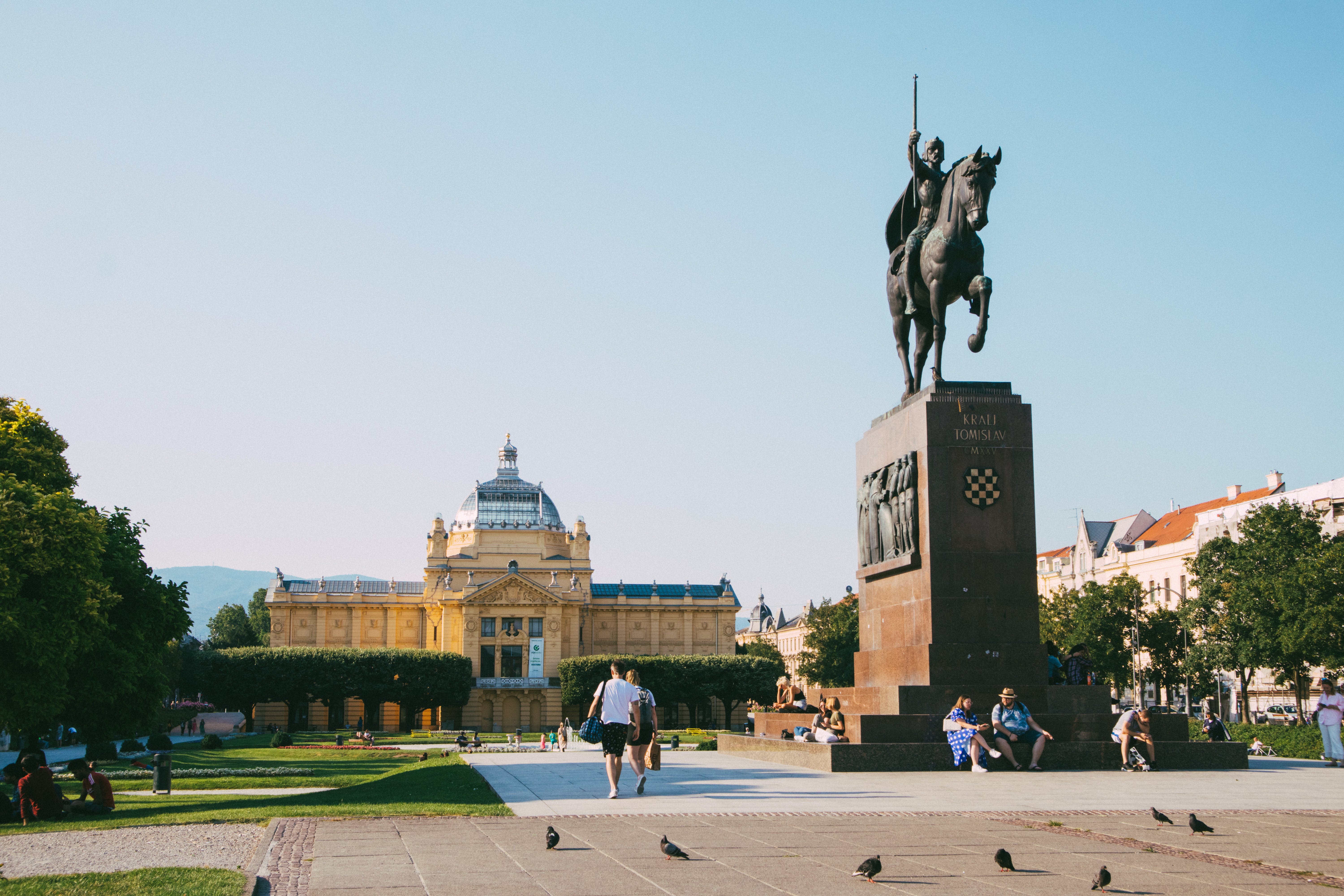
A fast-paced search across the city's main square leads to an unexpected lesson about trust and distraction.
The Black Queen brings rain and the birth of the lakes. A story rooted in Croatian folklore and the landscape that inspired it.
Five more original stories set across Croatia — each one a different genre, a different city, a different window into the language and the country.
A simple reading routine that builds all four pillars.
Each story can be used as a complete mini-lesson in about 20–30 minutes. The routine below is suggested — not compulsory. Do what works for you. The important thing is that you read, and that you read again.
Before you buy.
Everything you need to know — especially about what kind of thing this actually is.
Nine stories. The whole country. Seven euros.
A bridge between knowing Croatian and using it. Nine original stories at A2–B1 level, with audio, glossary, grammar notes, and cultural context — delivered instantly as a digital access link.
For €7 (Cijena 10. 9. 2026. / Price on 10 Sep 2026: €7), it is the easiest decision on this page.