
The Free Masterclass
An introduction to the 4-Pillar Method and the particular logic of Croatian grammar. It is free, available now, and will tell you quickly whether this approach is right for you.
Watch the Masterclass →Stop studying Croatian. Start living it — the way the language actually thinks, feels, and belongs.
There is something particular about Croatian that resists the usual methods. You can complete the app lessons, earn the streaks, work through a textbook — and still freeze the moment a real conversation begins. Not because you haven't tried. Because the tools you were given weren't built for what Croatian actually is.
Croatian is not simply English with different words. It is a different way of thinking, shaped by centuries of history, geography, and the cultural tapestry of Croatia — a country that has always known how to hold complexity without losing its soul. Once you understand the language from the inside, the grammar stops feeling like a wall and starts feeling like a map.
That gap between studying and speaking — that is what I work in.
You understand more than you can say, and the gap between the two is frustrating in a way that is hard to explain to people who haven't felt it.
Perhaps you grew up in the Croatian diaspora, with Croatian at the edges — at the dinner table, in phone calls that were partly understood, in the particular warmth of a language you heard more than you spoke. Perhaps you moved to Croatia and discovered, quickly, that the Croatian on language apps bears little resemblance to what your neighbours, your colleagues, your market vendors actually say. Perhaps you simply fell in love with this country and decided, at some point, that getting by was no longer enough.
The circumstances are different. The feeling is the same: you understand more than you can say, and the gap between the two is frustrating in a way that is hard to explain to people who haven't felt it.
You have probably tried the apps. You completed the lessons, earned the streaks, and still froze when the conversation moved faster than your translation could keep up. You watched YouTube videos, bought a textbook, told yourself you'd be more consistent this time.
The problem was never your consistency. The problem was that none of those tools were built for where you actually are — for someone who already has a relationship with Croatian, however complicated, and needs to understand it from the inside rather than collect it from the outside.
That is precisely who I made this for.
How I Teach · The 4-Pillar Method
For twenty years I have taught language at the University of Zagreb. But the method I use here — what I call the 4-Pillar Method — did not come from the academy. It came from watching adults fail with Croatian, and asking why.
The answer, almost always, was the same: they were learning the language without learning how it thinks.
Croatian is not simply English with different words. Its grammar is not a set of rules to memorise; it is a way of perceiving the world, of marking relationships between things, of placing emphasis on what matters. When you understand the logic — the zašto, the why — the patterns stop feeling arbitrary and start feeling inevitable. That is what I mean by the Croatian Mind: not fluency as a performance, but Croatian as a natural way of being.
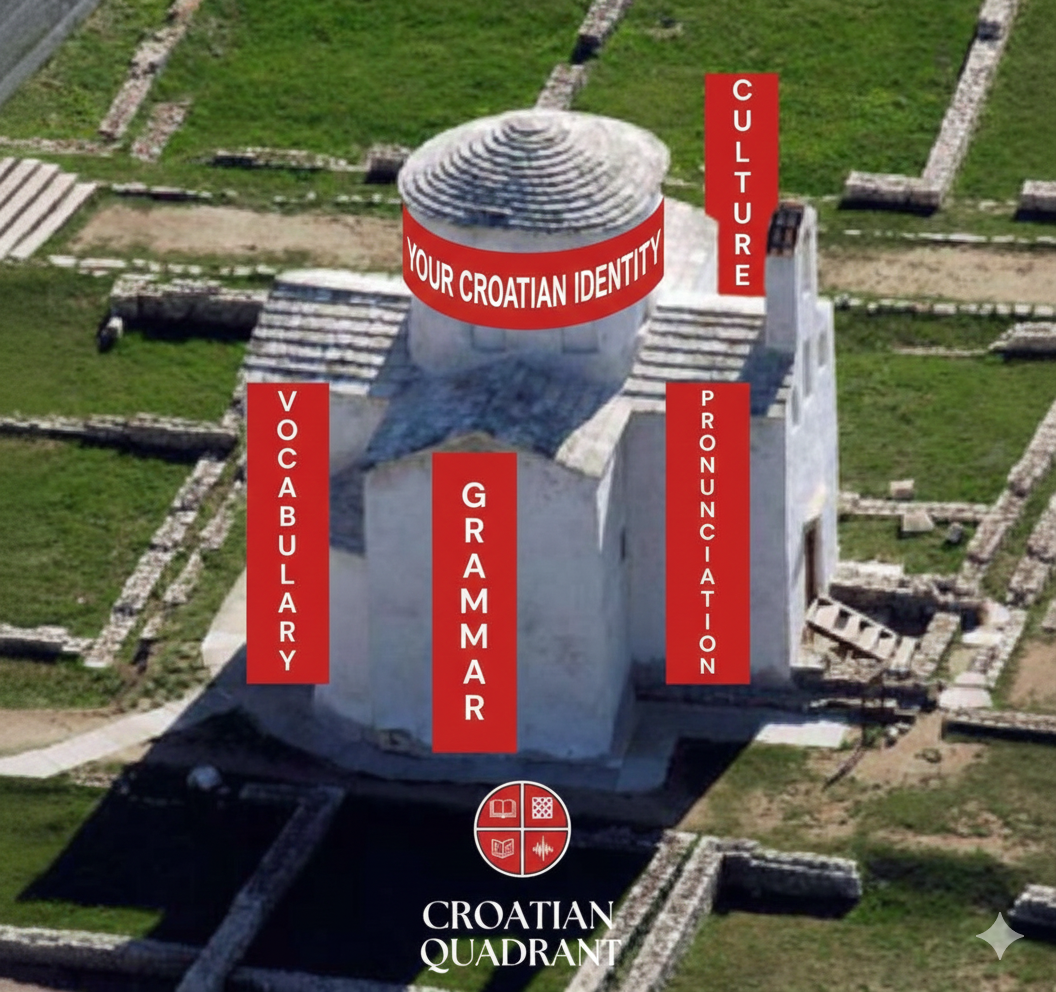
The four pillars that build it are grammar, vocabulary, pronunciation, and culture. Not as separate subjects, but as four expressions of the same underlying truth. The grammar reveals how Croatians think. The vocabulary carries what they feel. The pronunciation shapes how they are heard. The culture explains all three.
The structure of thought — not rules to memorise, but ways of perceiving. The grammar reveals how Croatians think.
The emotional logic of words — idiom, history, the concepts that don't translate. The vocabulary carries what Croatians feel.
The physical act of the language — rhythm, melody, the sound that earns trust. The pronunciation shapes how you are heard.
The soul that holds the other three — without it, the language is a body without breath. The culture explains all three.
Four pillars, one foundation — after the square floor plan of the Church of the Holy Cross in Nin, Croatia's oldest cathedral
And it is in that fourth pillar — culture — where I think most language courses fail most completely. You cannot understand why a Croatian sentence works the way it does without some feel for the cultural tapestry of Croatia: the coastal patience, the continental directness, the literary tradition that gave this small country a disproportionately large sense of its own inner life. Language and culture are not two subjects; they are one thing, seen from different angles.
Strip any one of the four pillars away and you are left with something technically correct but emotionally hollow. Together, they give you the language the way it actually lives — in the konoba, in the market, in the particular silence before someone says something important.
— Tihana Klepač · Talk Time Croatian
The Flagship Programme · A1–A2 · Live · One Cohort a Year
A1 through A2. One year. A cohort of people who take Croatian seriously.
The name is not accidental. The Church of the Holy Cross in Nin — Croatia's oldest cathedral — is a perfect square, four sides holding a cross at its centre. Four pillars. One foundation. The same logic that built that church is the logic that builds this programme.
The Croatian Quadrant™ is my flagship programme — a structured, year-long journey from first foundations to confident, living Croatian. It runs once a year, beginning in January, with a small cohort of learners who are ready to commit to the process.
I designed it around a simple conviction: adults learn languages best when the learning is coherent, sequential, and culturally anchored. Not lessons assembled at random, but a genuine arc — a beginning, a middle, and an arrival.
The people who join are rarely beginners in the casual sense. They come with history — a grandmother's voice they want to reach, a partner's family they want to belong to, a self that existed in another language before emigration carried it elsewhere. Many are heritage speakers who understand more than they can confidently say. Many have studied before and feel stuck somewhere around A1–A2. What they share is not a starting level but a seriousness — they want structure and depth, not entertainment.
Throughout, the sessions are live. The group is small. I know every student by name and by the particular shape of their Croatian struggle — whether that struggle comes from childhood, from relocation, or from the simple decision that this language deserves to be taken seriously. You do not need to arrive at the right level on the first day; Foundation is where most people begin, but the stages exist so you can find where you actually are and move through the year at the pace the language requires, not the calendar.
The structural bones of the language, taught not as rules to memorise but as ways of thinking to understand.
Vocabulary through idiom, history, and the specific emotional logic of how Croatians express things other languages struggle to name.
A consolidation. A breathing-out. Reinforce the essential grammar and vocabulary from Foundation and Boost so every conversation feels natural.
Where the language is no longer studied but inhabited.
The final consolidation. Review and refine your advanced skills to think, speak, and engage in Croatian seamlessly across any situation.
The five courses above are only half of what a Quadrant year actually holds. The rest lives in the campus itself — and it is not a bonus tacked onto the side. It is content I teach you, inside the Quadrant, how to actually use to build your Croatian.
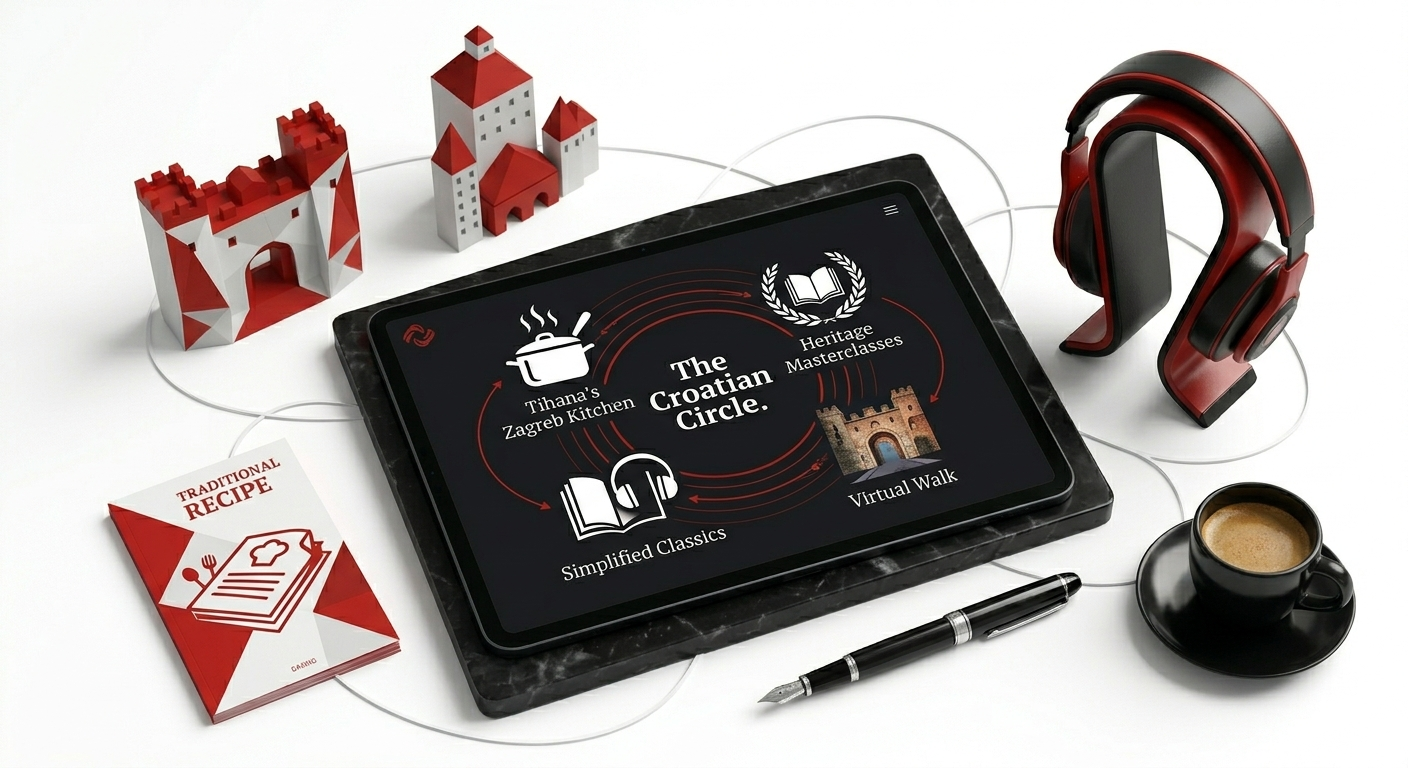
Everything here is content I teach you to use inside the Quadrant, to build your Croatian — not simply to browse. Four rooms, each with its own purpose:
Masterclasses on how adults actually learn a language: memory, strategy, mindset.
Croatian writers, painters, towns, and museums, filmed and narrated by me.
Croatian classics adapted to A2, as downloadable PDFs and as audio I read aloud, so you can practise pronunciation against them.
Croatian recipes in Croatian and English, used to practise the imperative, absorb new vocabulary, and attach language to taste and memory rather than a page.
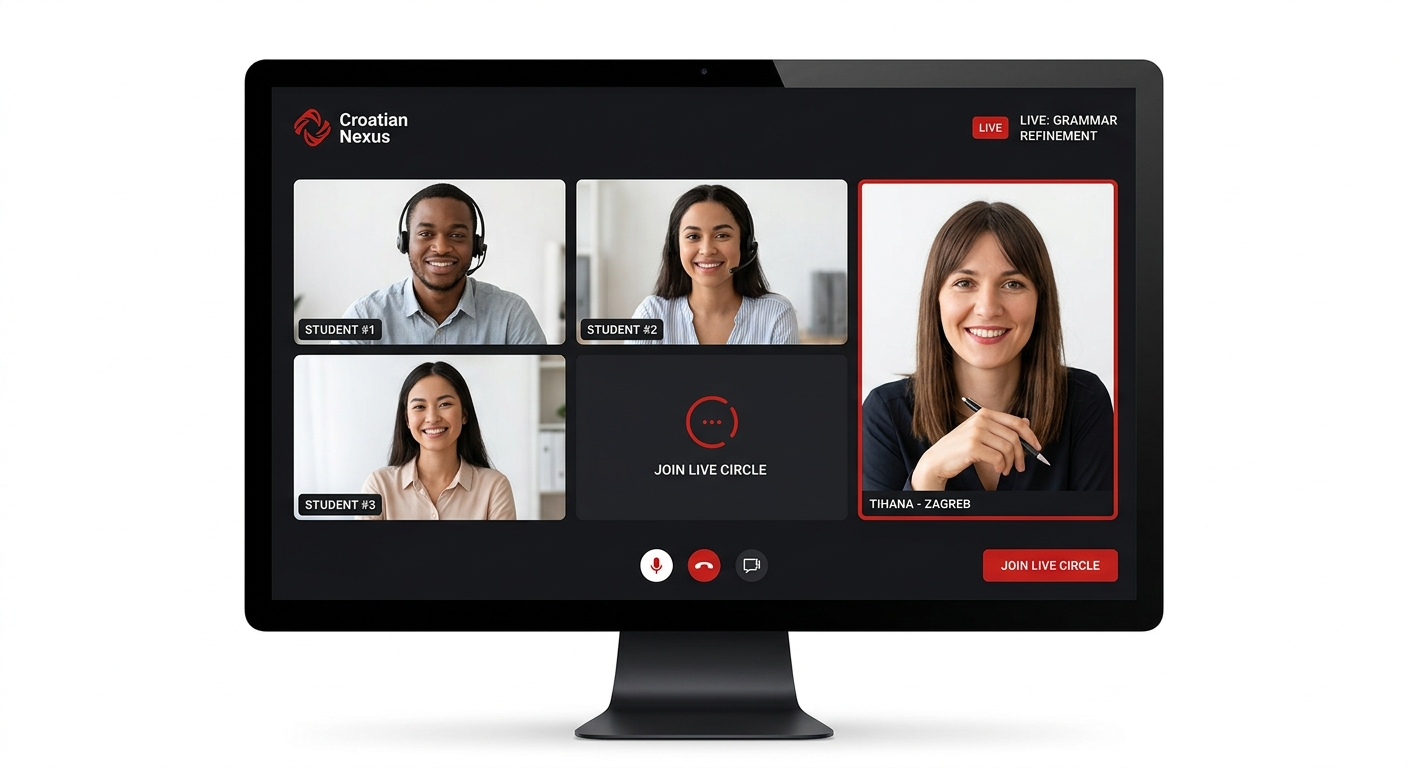
Grammar Therapy, Tuesdays. Ćakula Café, Thursdays. A monthly masterclass on strategy and culture. Every week, all year, Zagreb time.
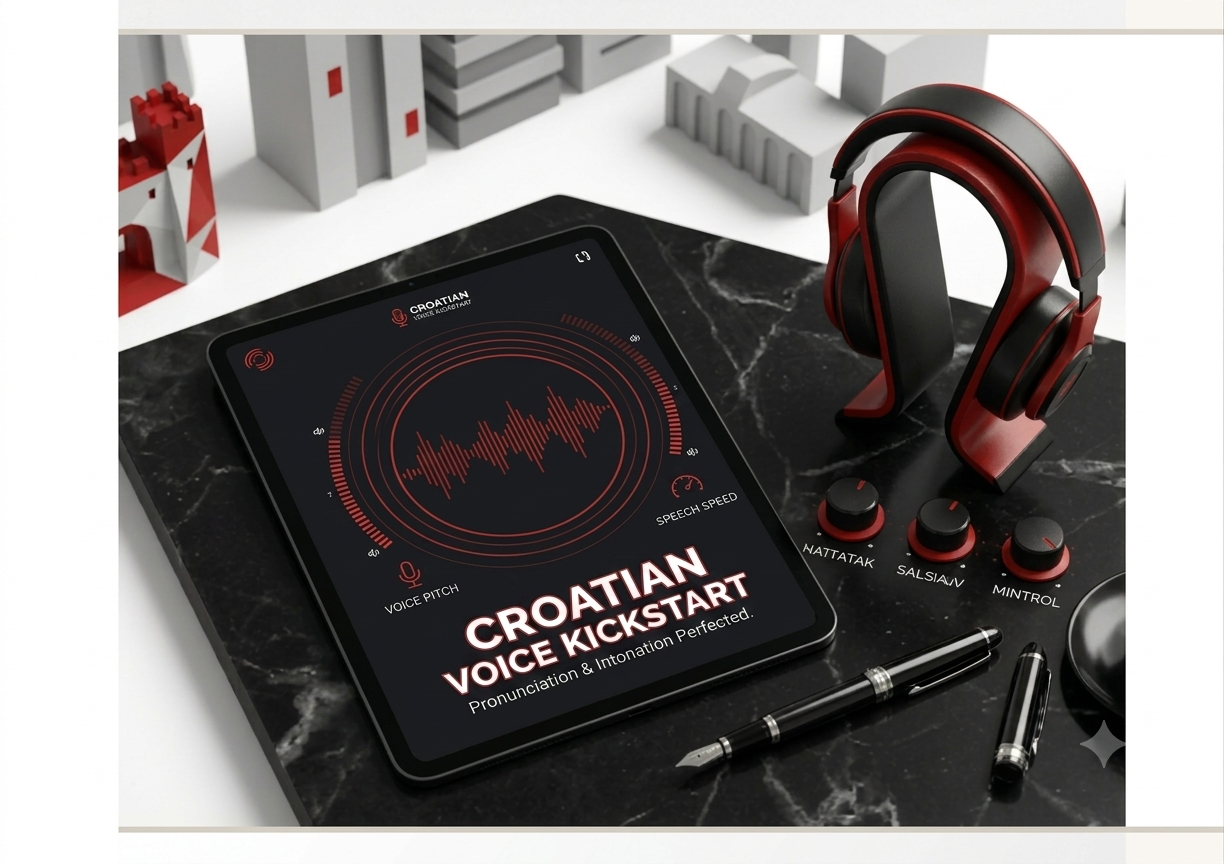
The pronunciation work most courses skip entirely — rhythm, stress, and melody, until Croatian sounds like it belongs in your mouth.
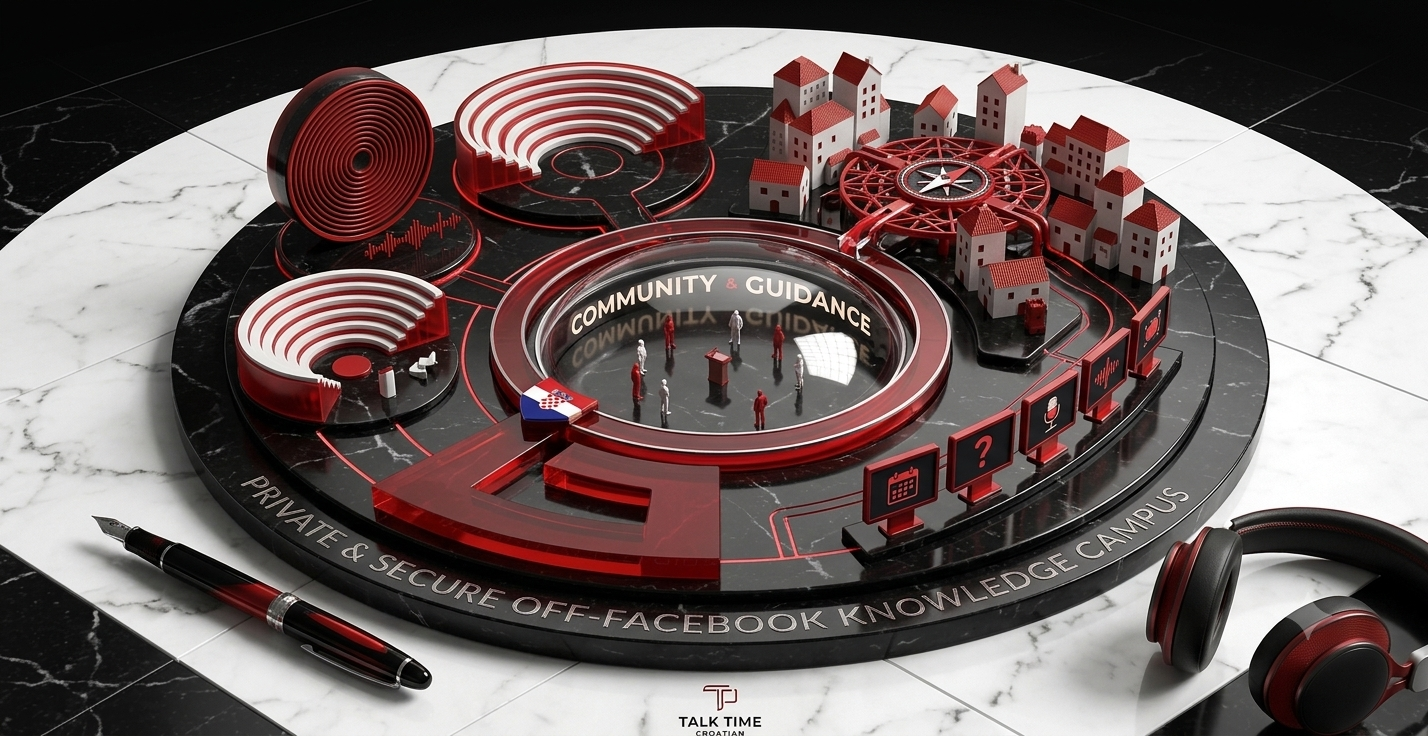
A private space, off Facebook, where you ask me directly — and I answer, in writing or in the next live session.
Next cohort opens January 2027.
When the January window opens, waitlist members hear first.
What Students Say
I do not measure progress by grammar scores. I measure it by the moment a student writes to say they finally understood a conversation they would have smiled through and nodded at before — or that they walked into a pijaca, asked a question, and got a real answer, not a polite simplification.
Croatian was banned in my father's house. Just as it was banned in his father's house. My family fled discrimination and wanted to just be Canadian. In a way, this course is giving me back some of that. Each one of us who started in Croatian Quadrant was in a different spot with the language and culture. That did not matter. The programme brought us together to learn. Tihana is an expert in how adults learn languages — and she's built that programme with her expertise. Engagement does not drive progression here. Learning does.
Katarina Kristick · Adult educator, Windsor, Ontario — Croatian Quadrant™ 2024
A Student's Story · Windsor, Ontario, Canada
I've had the pleasure of learning from Tihana over the past year, and her dedication to her students is truly exceptional. She has an incredible amount of patience with new learners, making even complex topics feel approachable. I've learned a tremendous amount under her guidance and highly recommend her instruction.
Brock Haywood
This was a wonderful introduction to the Croatian language. I have not come across another course in which I am able to learn about both the culture of Croatia and the language. Most noteworthy is Tihana's care for her students. This is not just a job for her. It is a passion to help students learn this language and thus experience the unique beauty of the country.
Heather Papich
I got a LOT of value from this course. Tihana goes above and beyond providing really good additional resources to help students understand how to express themselves correctly. Another great aspect is the comfortable atmosphere she creates among her students. Very quickly, it feels like a place to be yourself, ask your questions, and really have a good time while learning. Hvala lijepa!
Joan Clickner
Tihana builds a framework that is accessible to all levels of learners. She incorporates culture into language learning in so many ways: history, geography, recipes, music, dance. One result: my fellow students and I and Tihana have built a friendship that has transcended the actual weeks of the course. We have not stopped learning. This class offers so much.
Cathe Ostrowski
I wake up thinking of the first lessons and tenses. My brain is drawing parallels between the two languages so that I may visualise it in an orderly way. I feel that it's part of me because it was part of many of my ancestors and still living relatives. Thank you Tihana.
John Begg
I can't thank you enough for the intensity of your efforts to ensure that no child was left behind with your concise instructions. No doubt. You were born to be a teacher. Your dedication is inspirational.
Mary Kay Hoffman
I have now started to think in the language rather than read the word and try to translate into English then back into Croatian. I found a few movies and short reels on YouTube and started watching them. When they speak a bit slower I can understand the gist of the conversation.
Facebook Student
I honestly have learnt more in the short time I have actually given towards the 2 lessons I have attended than I have in 1 full term of face-to-face learning at a tertiary college — in Australia known as TAFE.
Vicki Huxtable — Australia
All Programmes
The Croatian Quadrant™ is not the only way in, and it is not the right one for everyone at every moment. I want to be honest about where each programme sits — so you arrive at the right table.
The structured beginner course you can start today. Eight weeks of culture-driven lessons built on the 4-Pillar Method — grammar, vocabulary, pronunciation, and culture working together from the first lesson. Lifetime access. The ideal preparation for the Croatian Quadrant™ if January feels far away.
Explore Croatian Entry Point →The flagship programme — a structured, year-long journey from first foundations to confident, living Croatian. One cohort per year, January start, small group. Whether your Croatian is made of household fragments and childhood echoes, or whether you are starting from nothing and want to do it properly.
Join the Waitlist →If you already understand basic Croatian but freeze when it's time to respond — daily fifteen-minute lessons, structured weekly themes, cultural depth throughout. You work at your own pace; the programme holds the shape.
Explore Level Up Croatian →The bridge between knowing the language and actually using it — nine original short stories at exactly the right level, with audio read by a native speaker, glossary, grammar notes, and cultural context built in. A mystery in a Zagreb museum, a tram that travels through time, the legend of Plitvice. Not a textbook. Not a phrasebook. Stories — because stories are how the brain holds language.
€7 · Cijena 10. 9. 2026. / Price on 10 Sep 2026: €7 Explore Short Stories in Croatian →Once you have the cases, the tenses, the structural bones — the Nexus is where language becomes literature. Weekly live seminars, small group, real-time correction, a monthly cultural syllabus moving through Croatian history and poetry.
Explore Croatian Nexus →About Me
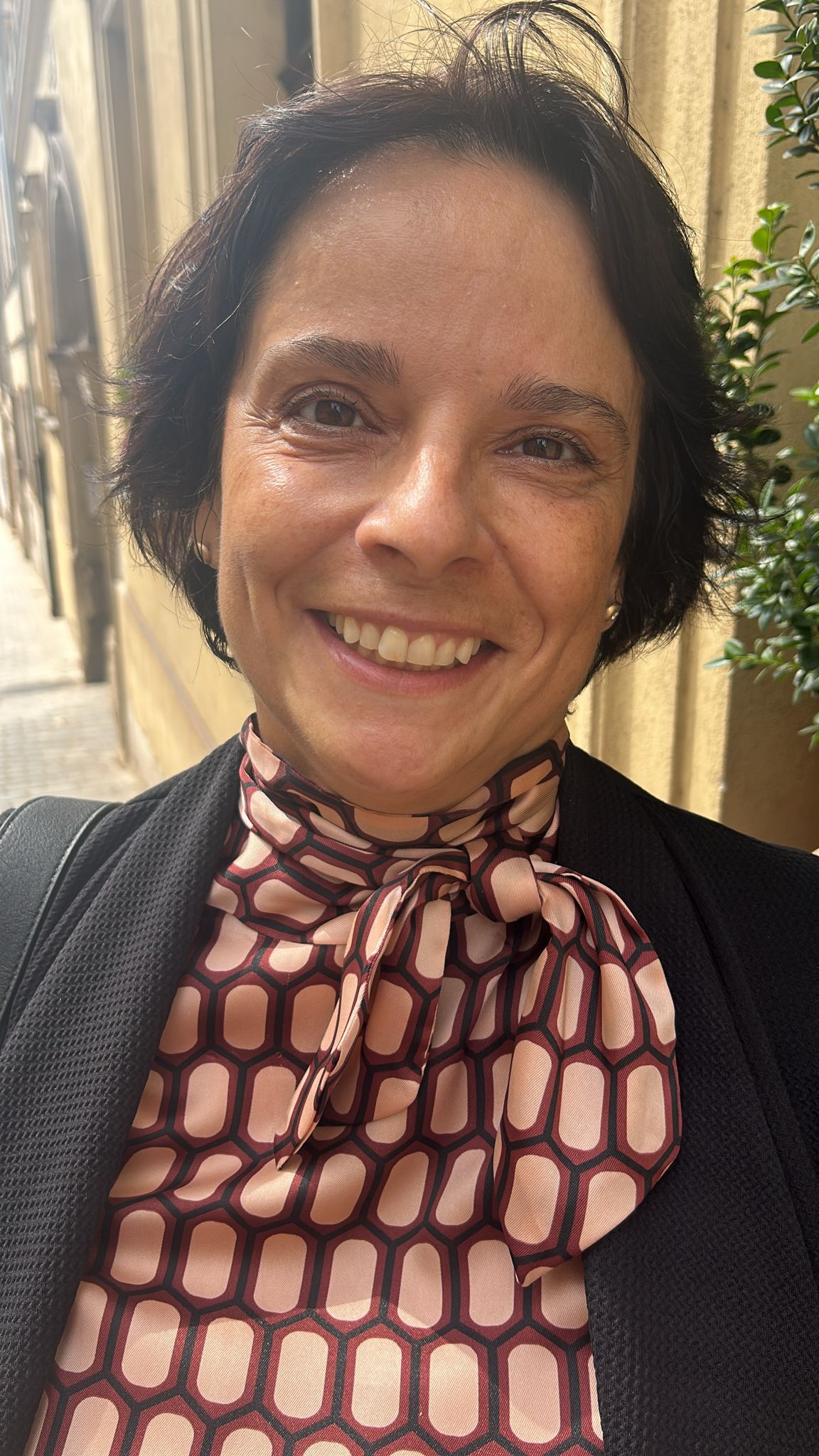
I am an Associate Professor at the University of Zagreb's Department of English — which may seem like an unlikely background for a Croatian language teacher, until you understand that studying how people learn other languages is precisely what taught me what is missing when adults try to learn this one.
In 2024 I founded Talk Time, where I teach Croatian online to heritage speakers and the diaspora.
I grew up immersed in Croatian not as a language to be studied but as a texture of daily life. The Istrian balun, the particular smell of a Dalmatian konoba at midday, the way a sentence in Croatian carries a weight that its English translation cannot quite hold. These are not decorative memories for me. They are the reason I teach the way I do — because you cannot separate the language from the cultural tapestry of Croatia, and I have never wanted to try.
My students come to me from many directions. Some grew up with Croatian in the house and never quite crossed from understanding to speaking. Some moved to Croatia for love, for work, for a life they chose, and found that the language kept them at a slight distance from the country they had committed to. Some simply decided, at a particular moment, that this language was worth understanding properly.
What I have learned, across twenty years of teaching, is that the gap between studying Croatian and speaking it is not primarily a gap of knowledge. It is a gap of permission — permission to speak imperfectly, permission to think in a language that does not yet feel entirely yours, permission to take the process seriously without treating it as an emergency.
That is what I offer. Not a shortcut. A path.
Featured Interview · Behind The Language · July 2026
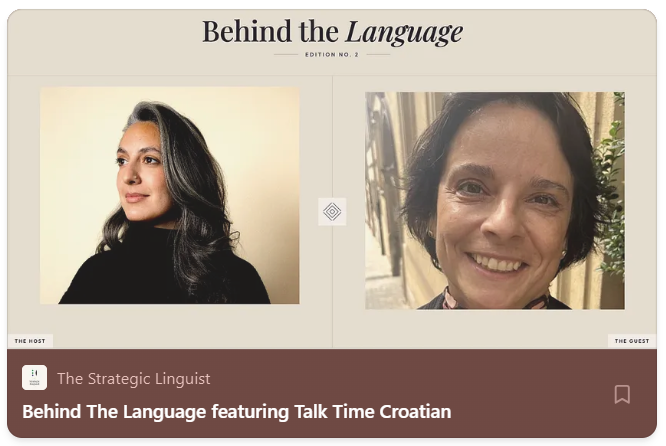
Linguist Rebecca Wicker invited me to Behind The Language, her monthly conversation with the linguists of Substack. We talked about what happens when a language lives in your family but not yet in your mouth — and why teaching Croatian is never only about grammar.
“Language as the border between being understood and being let in.”
— Tihana Klepač, in The Strategic Linguist
Two Public Talks in Croatian · Bookara & ZKM
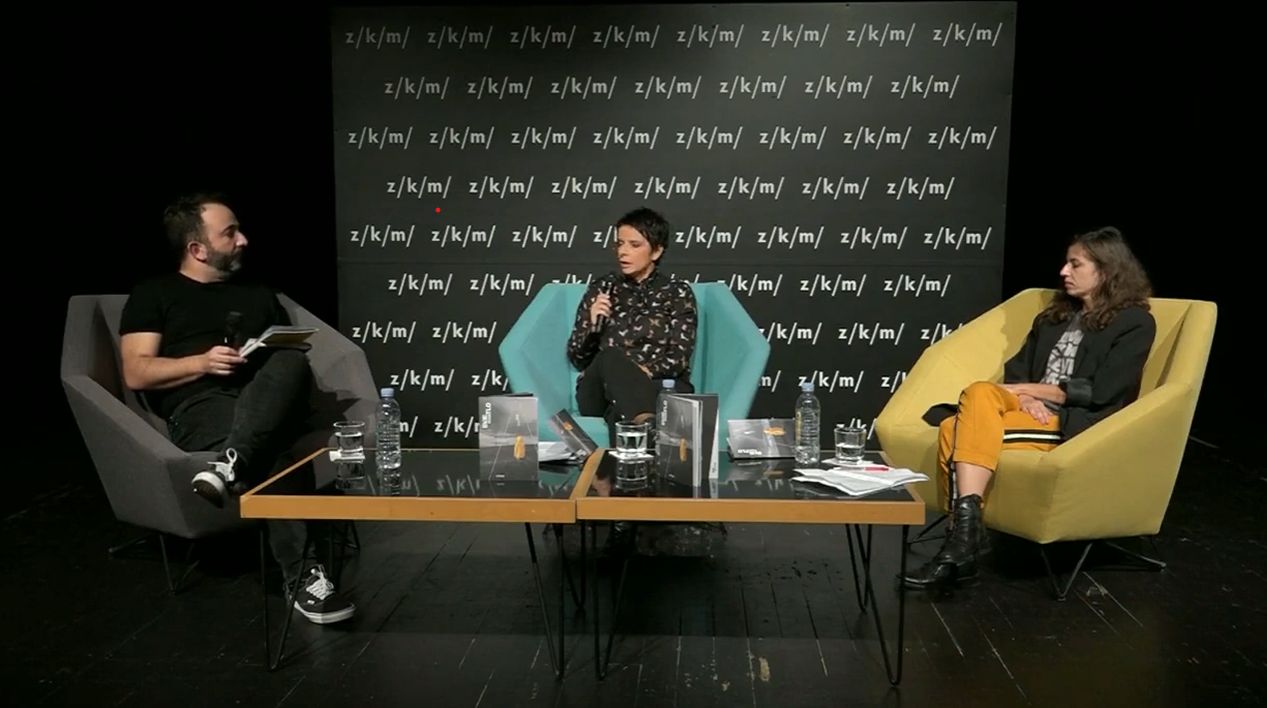
Two public talks in Croatian: on Roald Dahl at Bookara, a bookshop in Zagreb, and on British drama at Zagrebačko kazalište mladih, the evening before the premiere of Simon Stephens's Svjetlo pada. This is how educated Croatian really sounds when a person is thinking out loud, and it is the best listening practice I can offer a heritage speaker.
Start Here · Before You Commit · All Free
If you are not yet ready to commit to a programme — or simply want to spend some time with the language before deciding — everything in this chapter is free. Start with the Saturday Letter. Everything else follows from there.
A weekly essay — about language, about Croatia, about the literature and myths and history the language carries. It is free, it arrives every Saturday morning, and it is, I think, the truest introduction to what learning Croatian with me actually feels like. Subscribe and it will find you.
An introduction to the 4-Pillar Method and the particular logic of Croatian grammar. It is free, available now, and will tell you quickly whether this approach is right for you.
Watch the Masterclass →Slow Croatian — cultural topics, spoken at a pace that gives your ear time to settle in. It is not a lesson. It is more like sitting in on a conversation.
Listen on Spotify →Ćakula Café episodes, lessons, and films from Croatia — the language on video, in its own landscape, at its own pace.
Watch on YouTube →New to Croatian? Start here: Learn Croatian: Where to Start
Before You Write to Me
That gap is the most common thing I see, and it is not a sign you are behind. It usually means your vocabulary and listening grew inside the family, but grammar, pronunciation and active speaking never caught up alongside it. The 4-Pillar Method works on all four together, grammar, vocabulary, pronunciation and culture, so the language stops living only in your ears. The Free Masterclass explains exactly why this happens and what to do about it.
Yes. All my programmes are taught online and live, so you are speaking Croatian with me from the first lesson, not working through a recorded course alone. Many of my students are part of the Croatian diaspora, or partners of Croatians living abroad. The Croatian Quadrant has one intake each January, and Croatian Nexus is open all year, so you can join from wherever you live.
The Croatian Quadrant is the foundational programme, A1 to A2, guided and linear, with one intake each January. Croatian Nexus is for learners already above A2, and it works differently: it is circular rather than level-based, open all year, and built around a monthly theme drawn from Croatian history, literature and song. Most people start with the Quadrant and move into Nexus once the foundation is solid.
No. Adults do not learn languages badly, they just get taught badly, with flashcards and disconnected rules instead of something coherent and culturally anchored. Every student I work with is an adult. Commitment is the only real requirement, not age.
No, though most of the people I teach do arrive with fragments, a grandmother's phrases, a feeling for the sound of it, even if the grammar was never explained to them. If that is you, Croatian Entry Point is built specifically to bring order to what already feels chaotic. If you are starting from nothing at all, the Free Masterclass is the right first step.
An app can teach you words. It cannot teach you why a Croatian sentence is built the way it is, or how to move between the formal Croatian of an office and the Croatian spoken at a family table. Grammar, vocabulary, pronunciation and culture are taught as one connected system, live, with a scholar's attention to why the language works the way it does, because that is what actually gets you from understanding Croatian to living in it.
Croatian Quadrant™ — January 2027
The next cohort opens in January 2027. Because the programme is small and the support I offer each student is personal, I open enrolment once a year and work with a limited number of people at a time.
If you leave your name and email below, I will write to you when the window opens — with full details of the programme, what it costs, and what to expect. There is no obligation, and I do not send newsletters to this list. I write to you once, when it is time.
Already on the waitlist from a previous year? You're still on it. No need to sign up again.
Not every message is about the Quadrant. If you have a question about another programme, something practical, or you simply want to reach me before deciding anything at all — write directly. I read everything myself, and I answer myself.
[email protected]