Nobody Speaks Standard Croatian. Not Even in Zagreb.
I keep thinking about a student of mine, a woman from Melbourne, third generation, whose Croatian is better than she has ever let herself believe. A few months ago she was at a lunch in Zagreb, at her cousin's flat, and she used a word. Said it the way it had always been said in her family, the way she must have heard it a thousand times as a child. Nobody corrected her. Nobody was unkind. There was just a pause, a second, maybe less, before the table picked the conversation back up and moved on to something else.
She could not have told you, right there at the table, what she felt. But she felt it. She went home that night and did not open her mouth in my class again for a month and a half.
I have been teaching Croatian to diaspora adults for a long time now, and I have watched that particular pause do more damage than any exam I have ever set. It happens over and over, in different kitchens, in different countries, and almost nobody who has lived it can explain what it actually is. I wrote once about the smaller, sharper version of the same feeling, the reflex to say sorry, my Croatian isn't good before you have even opened your mouth. This is the same shame. It is just older than you are.
Nobody at that table doubted for a moment that she was speaking Croatian. What she ran into, without knowing it, was something else: the leftover heat from an argument that is genuinely old, genuinely specific, and has almost nothing to do with her. An argument about what this language should be called, and who gets to decide that. Her grandmother was never in the room where it happened. Neither was mine.
If you would rather hear this argued out loud than read it, I made a video that goes further into the question sitting underneath all of it: Croatian, Serbian and Bosnian: An Honest Answer From a Linguist.
Before there was one Croatian, there were three
To understand the pause, you have to go back further than most people expect.
For most of its history, there was no single written Croatian, not in the sense the word implies today. There were three large dialect regions, each named for how it says the word "what": štokavski, kajkavski, čakavski. I have written about each of these three on their own, the three dialects that make up one country, the particular country folded inside the word kaj, and the dialect on the coast that everyone thinks they are already learning. Here I only need the shape of the thing: people wrote serious literature in all three, for centuries, without treating this as a problem that needed fixing.
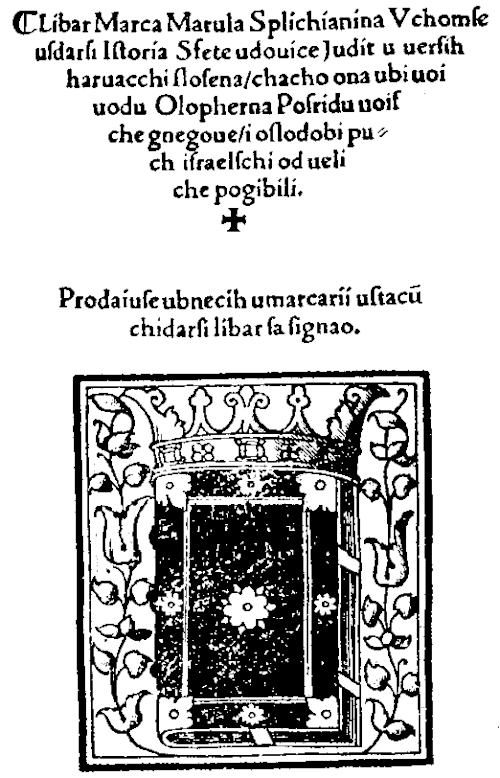
Marko Marulić wrote Judita, often called the first major work of Croatian literature, in the čakavian of Split, back in 1501. Up north, kajkavian had its own writers and its own dictionaries, its own grammars, long before anyone thought to ask which dialect Croatian "really" was. Dubrovnik wrote its own štokavian and produced Ivan Gundulić, whose epic poetry alone proves the language could carry that kind of weight. I have written elsewhere about how Croatian writers kept the language alive through centuries of occupation and hardship, in Composed in Croatian Verses.
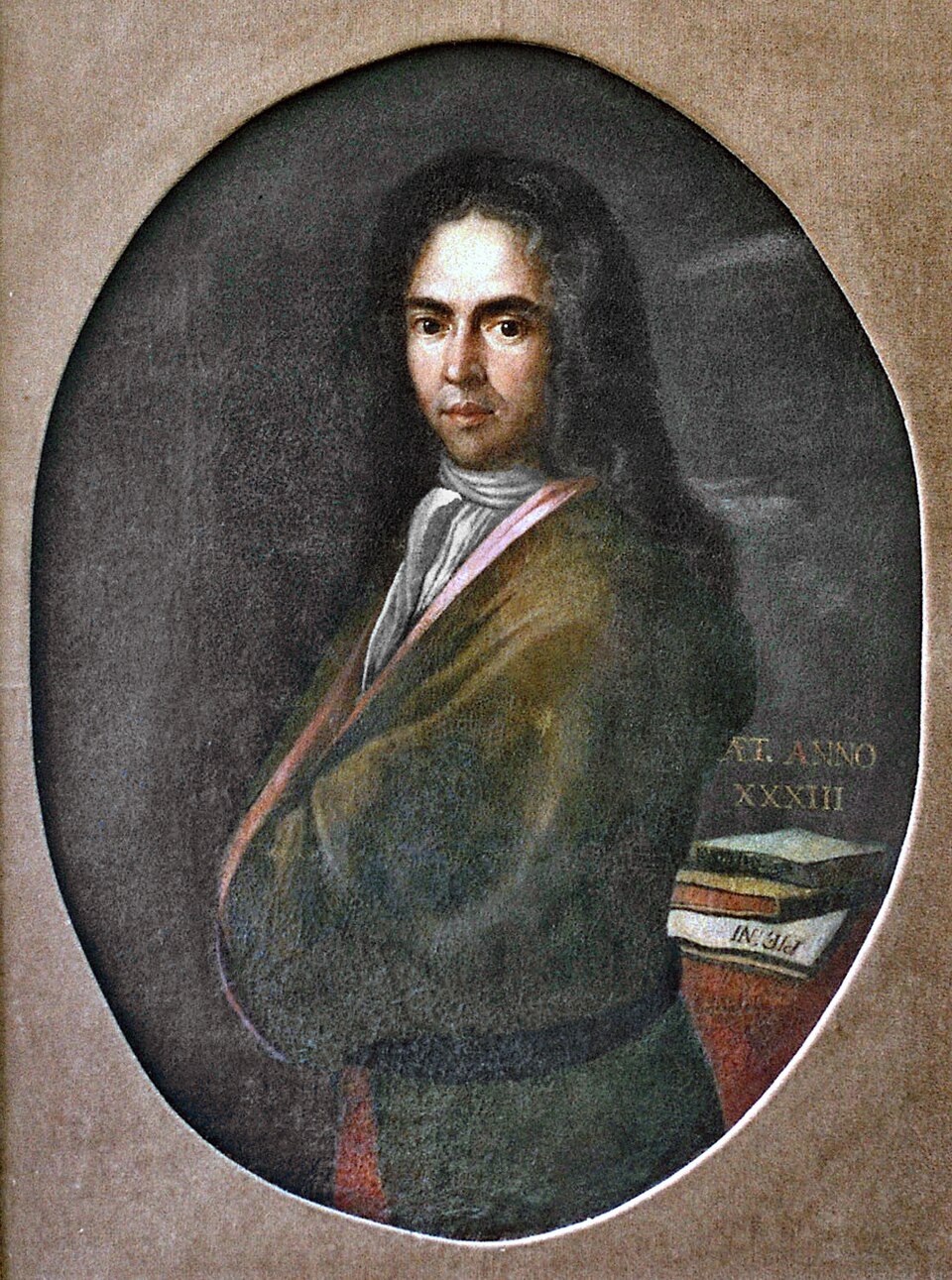
A person could be a Croatian writer in any of the three. Nobody was waiting around for a single grammar to arrive and settle the matter.
The story most people have heard about what happened next goes something like this: in the 1830s, a handful of nation-builders sat down and chose štokavian, and the other two simply lost. It is a clean story. It also is not true.
What actually happened is slower and sadder. Croatia's čakavian coast might well have produced its own standard, but the Battle of Krbava Field in 1493, and the century of raids that followed it, emptied out the interior population that could have sustained one. Meanwhile, štokavian speech had already been quietly becoming a shared written language for a hundred years before anyone called themselves an Illyrian, through writers scattered from Slavonia to Dalmatia to Dubrovnik, all solving the same practical problem: how do I write so that someone two regions over can actually read me.
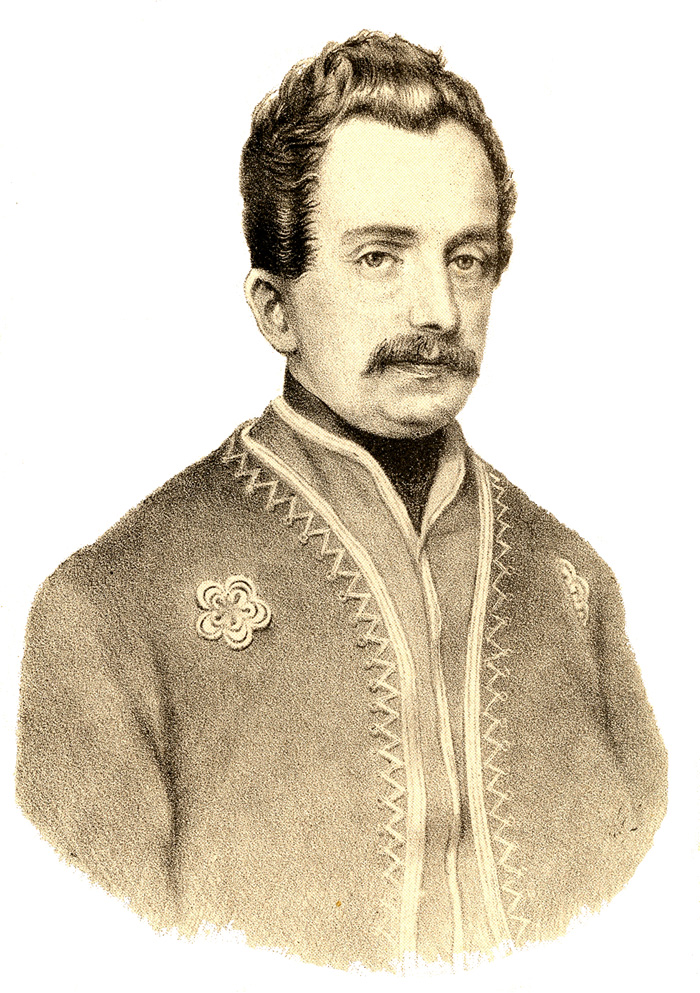
Ljudevit Gaj, the man usually credited with founding the modern standard in 1836, mostly solved a much narrower problem than that. He brought his own kajkavian region over to the system of diacritics that the other two traditions were already using. He joined something. He did not invent it. I have gone into that whole sequence at more length before, Krbava Field, the Illyrians, what Gaj's 1830 pamphlet actually did, in Once Upon a Time.
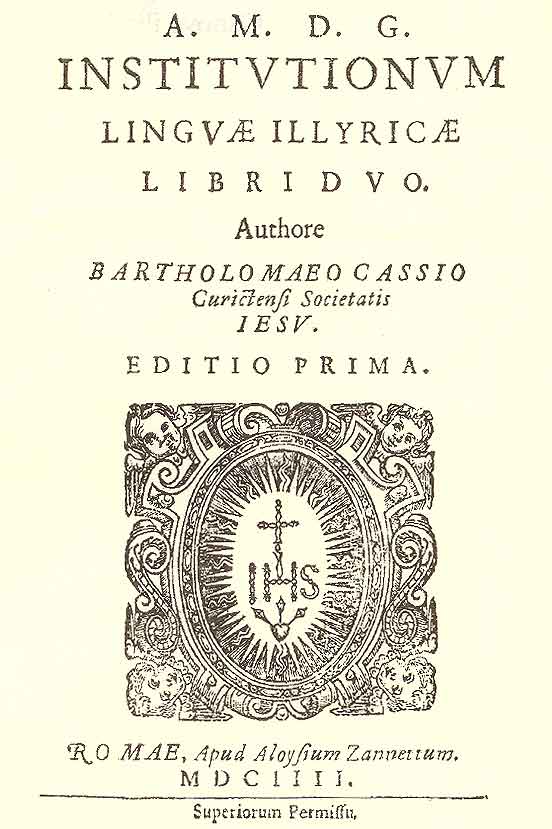
And nothing in Croatian died in 1836. Kajkavian and čakavian are still written today. As early as 1604, in the very first Croatian grammar, Bartol Kašić already understood the written language as a blend of čakavian and štokavian, not a replacement of one by the other. Your grandmother's kajkavian, if that is what she carried, was never the casualty of some committee's decision. It is one of the three things the standard is actually built from.
What the two-hundred-year argument was really about
If the language itself was never really in question, then what were people fighting about for two centuries?
Its name. And who had the right to decide it.
In Vienna, in 1850, eight men signed two pages agreeing that southern štokavian speech should serve as a shared literary language. The reasoning was hopeful and a little desperate: the South Slavs were scattered across empires, none of them large enough on their own to support a real literary culture, and a bigger shared readership seemed like the only way forward. It did not work the way they hoped. Croatia's own Institute for the Croatian Language records, flatly, that after the agreement was signed, one common language simply did not function in practice.
A century later, in the Novi Sad Agreement of 1954, a much bigger and much more official process arrived at a similar conclusion, this time with a government behind it. And the Croatian side, worth knowing, did not choose its own representatives at that meeting. They were invited by the Serbian side. What followed, in the words of the Institute again, without any embellishment at all, was a period very difficult for the Croatian language.
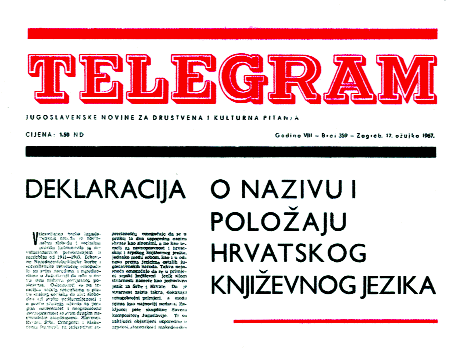
Then, in March of 1967, eighteen Croatian cultural and scholarly institutions signed a short declaration, printed in a Zagreb weekly, that most people who invoke it today have actually never read. It did not deny that Croatian and Serbian share deep linguistic ground. It said the opposite, in writing. What it argued was that sharing that ground did not erase the right of a people to call its own language by its own name. Its very first concrete demand was equal constitutional status for four literary languages, not one: Slovene, Croatian, Serbian, Macedonian. The men who signed it were not trying to take a language away from anyone. They were claiming a name for their own, and handing the same right to everyone standing beside them.
They paid for it. Careers were damaged. Miroslav Krleža resigned from the Central Committee that same April.
Here is the part almost nobody puts together, and I think about it more than almost anything else in this history. The decade in which the largest wave of Croatian economic emigration was preparing to leave the country is the same decade the language argument was at its most politically loaded. Grandparents who left in the 1950s and the 1960s did not carry a settled, neutral Croatian out of the country with them. They carried a language that was, at that exact moment, the subject of a live and dangerous argument. And then they boarded a boat, or a plane, and simply stopped receiving updates.
What was actually sitting inside that pause
So when my student's cousins paused for a second at that lunch table, what they were reacting to, most likely without knowing it themselves, was a nerve running all the way back through their own family's living memory. Within a generation or two of the people at that table, what you were allowed to call a word could genuinely cost you your standing, your career, your safety. That is not a small inheritance. That is a nerve, and her word touched it by accident.
I want to say something here too about the so-called dictionaries of difference between Croatian and Serbian, the razlikovni rječnici, because I hear them invoked constantly, and almost always with more heat than accuracy. They go back to a 1940 volume and were revived in a bigger form in 1991, and what they actually were, historically, was a working tool. A proofreader's handbook for editors in Croatia trying to do their jobs under real, specific political pressure. They were never built to be an inventory of how a family in Wollongong, or Rosario, or Munich has spoken for three generations. I have written before about the smaller version of this, the small, ordinary words that give a diaspora speaker away without them ever choosing it. When that same logic reaches a diaspora kitchen decades later, stripped of the context it was built for, it can turn an ordinary inherited word into something that feels like it might be on a list. It was never meant to carry that weight, and it is not fair that it does.
Whose language is it, then
I want to leave you with something from Radoslav Katičić, one of the most serious philologists this country has produced. In a lecture at the Croatian Academy of Sciences and Arts, he said something that has stayed with me for years: a norm that only exists on paper means very little if nobody actually uses it. The standardness of a language, he said, is not something you assess by consulting a handbook. You assess it by usage.
This is not a new question for this language, incidentally. I wrote once about the Bašćanska ploča, the stone tablet on which two Croatian abbots recorded a land grant eleven hundred years ago, entirely in their own script and their own tongue. It was an act of exactly this kind of self-determination, a people deciding for itself what its own language was, a thousand years before anyone in Vienna or Novi Sad thought they had the right to decide it for them.
Sit with that for a moment, because it quietly settles something. The story I have just told you is a story about authority. Eight men in Vienna decided something. A conference in Novi Sad decided something else. Eighteen institutions in a magazine decided a third thing. In every one of those rooms, people were making decisions about a language your family actually speaks, without knowing your family existed.
But if standardness comes from usage, then it is settled by speakers. All of them. Including the ones in Wollongong, and Rosario, and Munich, who left before any of this settled and simply stopped hearing about it.
Your grandmother's word was never a mistake. It is evidence of exactly where your family was standing the day the room emptied out. That is not the same thing as an error, and it does not deserve to be carried like one.
There is more to say about what to actually do with all of this: which parts of what you carry are worth defending without apology, which are genuinely worth adding to, and what to say the next time someone's face does something small at a table. I go into all of that, with the full sourcing, in the Saturday Letter, my weekly newsletter for Croatian diaspora and heritage speakers at talktimecroatian.substack.com. But I wanted to put this part here too, outside the newsletter, because I think it belongs to more people than the ones already reading it.
This is also, in a roundabout way, why I built TalkTime Croatian the way I did. Most people who come to me wanting to learn Croatian online are not tourists after fifty holiday phrases. They are heritage Croatian speakers who grew up with the language at the edges of their lives and want to know how to actually learn Croatian as an adult, with a history like this one sitting quietly inside their own family. My answer to that has always been the same: you learn the standard seriously, and you keep everything else you already carry, because it was never in competition with the standard to begin with. That is the whole premise behind how I teach, through what I call the four pillars, grammar, vocabulary, pronunciation and culture, built together rather than one at a time.
Tihana Klepač is an Associate Professor at the University of Zagreb's Department of English and the founder of TalkTime Croatian, where she teaches Croatian to diaspora and heritage speakers online through the Croatian Quadrant™. This essay grew out of a longer piece, "Standard Croatian Isn't Anyone's Native Language — Here's the Proof," first published in the Saturday Letter from Zagreb, her weekly newsletter — read the full essay, with complete sourcing HERE. She talks through the closely related question of how Croatian, Serbian and Bosnian actually relate in this video: Croatian, Serbian and Bosnian: An Honest Answer From a Linguist. Find out more at talktimecro.com.
Keep learning Croatian with Tihana
Listen and watch
Ćakula Café podcast, on Spotify — Slow Croatian for heritage speakers and diaspora adults at A2–B1.
Ćakula Café, on Apple Podcasts — The same podcast, for listeners on iPhone and Mac.
Ćakula Café, on Castbox — The same podcast, for listeners who prefer Castbox.
TALK TIME on YouTube — Free Croatian lessons and films, with cultural context.
Podcast episodes on Substack — Audio companions to the Saturday Letters.
Start here, free
Learn Croatian: Where to Start — A beginner’s orientation for adults learning Croatian.
The Free Masterclass — An introduction to the 4-Pillar Method and the logic of Croatian grammar.
The Konoba Test — A short quiz on where you are actually standing in Croatian.
Saturday Letter from Zagreb — A weekly essay on language, culture and belonging, free in your inbox.
Courses and books
Croatian Entry Point — A1 self-study: eight weeks of culture-driven lessons, lifetime access.
The Croatian Quadrant™ — A1–A2 flagship live programme, one cohort a year; join the waitlist.
Level Up Croatian — A2 self-study: daily fifteen-minute lessons in weekly themes.
Short Stories in Croatian — Ebook for A2–B1: nine original stories with audio, glossary and grammar notes.
Croatian Nexus — Post-A2 live seminars: where the language becomes literature.
More Saturday Letters
The Silence Between Generations — What is lost when a language is not passed on, and what can still be recovered.
Coming Home in a Language You Half Remember — The returnee’s wall at the counter, and why the language is closer than you think.
Inat — The word your grandfather lived by, and where it came from.
The Word That Will Not Cross — Why čežnja is not longing and fjaka is not laziness.
Does Croatian Make You Think Differently? — What is real, and what is beautiful nonsense, in the idea that a language shapes a mind.
The Kitchen Was a Language Policy — Why Croatian was, or was not, passed down to you.
What English Does to Your Croatian While You Sleep — Why your grandmother’s Croatian did not stay frozen the day she left.
Why You Feel Like a Different Person in Croatian — Why volim te weighs more than I love you.
You Are Not a Tourist in Your Own Language — The emotional case for coming home one register at a time.
The Konoba Test: Where Are You Actually Standing? — Why “what level is my Croatian” is the wrong question.
The Small Words That Give You Away — Why flawless Croatian can still mark you as a stranger: pa, ma, daj and the third rakija.
The Country Inside the Word Kaj — How the old language of the north became a place you carry.
Slavonia: The Gateway Dialect — The oldest Croatian štokavian is hiding in the east.
Who Gets to Tell the Story — Postcolonial theory, a nineteenth-century pamphlet and your grandmother’s Croatian.
Follow