
Mladen Kušec: The Voice of Croatian Childhood and Cultural Heritage
Djeca u sebi nose svu mudrost ovoga svijeta, samo im treba dati priliku da je pokažu.
Children carry all the wisdom of this world within them; they just need the chance to show it.
- - Mladen Kušec
Mladen Kušec, a cherished figure in Croatian literature and media, has left an indelible mark on the hearts of many. His stories and programs have entertained and educated generations of children, which makes him a vital force in preserving and promoting Croatian cultural heritage. In this blog post, I will explore his immense contributions to children's programming and literature.
A Glimpse into Kušec's Early Life
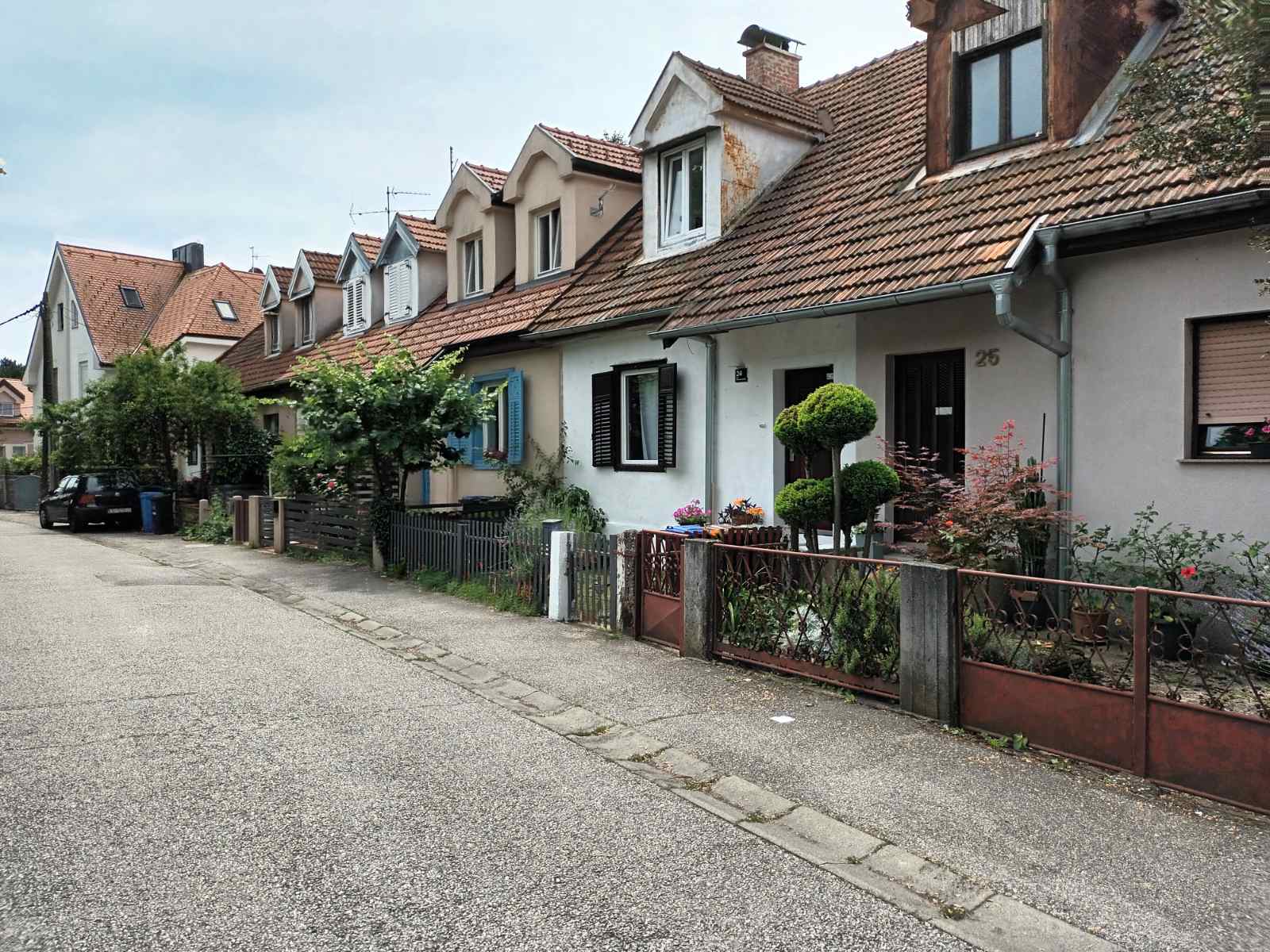
Mladen Kušec was born on 1 February 1938 in Zagreb. Growing up in a large family in the railway company housing, his childhood was filled with adventure and imagination. Despite the post-war scarcity, Kušec often reminisced about this era as a wonderful human period. His stories of inventing games and sharing food brought back from trips by his father reflect the simplicity and richness of human connection during those times:
I lived in a neighborhood that, although built a long time ago, was constructed more humanely than today's massive buildings. Each house had its own garden, its own cherry trees, its own plum trees. I would steal fruit from my friend's place, and he would come to mine. My father would chase him, and his father would chase me. It was all joy and play! We engaged in sports, ran around Zoričić Square, jumped long distances, boxed, practiced pole vaulting – actually using an ordinary plank!
We had to invent every game ourselves. Parents worked a lot, but even without cars, they managed to accomplish everything in life. They always had time for their children. Today, I see that everything is full of unruly children! In the fifties, in the post-war period, we were all poorer, but I insist that it was a wonderful human era! And that’s why I constantly return to my childhood.
(Mladen Kušec in an interview with Kreško Skorzet for Yugopapir, March 1986)
Kušec's Magical Stories: Tonkica Palonkica and Plavi kaputić
Kušec's storytelling prowess is best exemplified in his beloved creations, Tonkica Palonkica Frrrrrrr and Plavi kaputić. Tonikca Palonkica is playful series which became a staple for Croatian children. Airing every workday morning, it transformed cold winter mornings into times of laughter and fun. The character Tonkica Palonkica, along with the signature "frrrrrrr" sound, captivated young listeners and readers, making it an enduring favorite. Plavi kaputić was different. This heartfelt story delves into themes of loneliness, friendship, and the complexities of adult life from a child's perspective. The dialogues between the little Ivančica and her neighbor Spavalo are rich with everyday language and idiomatic expressions, providing a practical context for learners to apply their skills.
Contributions to Children's Programming
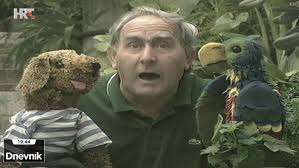
Kušec’s contributions to children's programming are unparalleled. His ability to connect with children was evident in all his shows from Bijela vrana and Patuljci pojma nemaju to Tonkica Palonkica and Hihotići.
Bijela vrana (White Crow) which first aired in 1973, aimed to prove that children’s wisdom is often overlooked by adults. Kušec’s approach of asking children serious questions and treating their answers with respect highlighted the profound simplicity of childhood wisdom. In Patuljci pojma nemaju (Dwarfs Have No Clue) Kušec interviewed young children, asking them big life questions. The responses were often humorous yet insightful, reflecting the innate wisdom of children. Answering why he was talking to children asking them why rain falls, what are raindrops like, what is the most important thing in life and so on Mladen Kušec replied: “What I wanted to achieve is what we all lack - that is warmth!”
Preserving and Promoting Croatian Cultural Heritage
Kušec's stories and programs are more than just entertainment; they are a vital part of Croatian cultural heritage. By weaving everyday Croatian life into his narratives, he preserved the cultural nuances and traditions of the country. His works are a treasure trove of linguistic and cultural insights, making them invaluable for both native speakers and language learners.
Learning Croatian Through Kušec's Stories
Using Kušec’s stories as a learning tool offers a unique and engaging way to grasp the Croatian language. His simple yet emotionally rich sentences make for an excellent introduction to Croatian literature. Whether it’s the Tonkica Palonkica or the heart-warming Plavi kaputić, each is a treasure trove of cultural and linguistic insights.
Kušec Legacy
Mladen Kušec's legacy lives on through his stories and the countless lives he touched. By learning Croatian through his enchanting tales, you’re not just acquiring a new language; you’re also immersing yourself in the rich cultural tapestry of Croatia. Let’s honor his memory by keeping his stories alive and sharing them with future generations.
If you were captivated by the stories of Mladen Kušec and his contributions to Croatian culture, you’ll love my in-depth YouTube video on this remarkable figure! 🎥 In the video, I explore Kušec’s life, his lasting impact on Croatian media, and the way his work captured the spirit of everyday people.
👉 Click here to watch and immerse yourself in the legacy of Mladen Kušec.
If Kušec's warmth stayed with you, Lessons in Life and Language dives deeper into what his stories can teach language learners. And if you're just starting your Croatian journey, the Croatian Entry Point program uses this same simple, story-driven approach to get you ready for the Quadrant.
Tihana Klepač is an Associate Professor at the University of Zagreb's Department of English and the founder of TalkTime Croatian. She teaches the Croatian Quadrant™, a structured, culturally immersive course designed to help learners stop translating and start thinking in Croatian. Find out more at: talktimecro.com.
Discover how his storytelling continues to inspire generations today!
Keep learning Croatian with Tihana
Listen and watch
Ćakula Café podcast, on Spotify — Slow Croatian for heritage speakers and diaspora adults at A2–B1.
Ćakula Café, on Apple Podcasts — The same podcast, for listeners on iPhone and Mac.
Ćakula Café, on Castbox — The same podcast, for listeners who prefer Castbox.
TALK TIME on YouTube — Free Croatian lessons and films, with cultural context.
Podcast episodes on Substack — Audio companions to the Saturday Letters.
Start here, free
Learn Croatian: Where to Start — A beginner’s orientation for adults learning Croatian.
The Free Masterclass — An introduction to the 4-Pillar Method and the logic of Croatian grammar.
The Konoba Test — A short quiz on where you are actually standing in Croatian.
Saturday Letter from Zagreb — A weekly essay on language, culture and belonging, free in your inbox.
Courses and books
Croatian Entry Point — A1 self-study: eight weeks of culture-driven lessons, lifetime access.
The Croatian Quadrant™ — A1–A2 flagship live programme, one cohort a year; join the waitlist.
Level Up Croatian — A2 self-study: daily fifteen-minute lessons in weekly themes.
Short Stories in Croatian — Ebook for A2–B1: nine original stories with audio, glossary and grammar notes.
Croatian Nexus — Post-A2 live seminars: where the language becomes literature.
More Saturday Letters
The Silence Between Generations — What is lost when a language is not passed on, and what can still be recovered.
Coming Home in a Language You Half Remember — The returnee’s wall at the counter, and why the language is closer than you think.
Inat — The word your grandfather lived by, and where it came from.
The Word That Will Not Cross — Why čežnja is not longing and fjaka is not laziness.
Does Croatian Make You Think Differently? — What is real, and what is beautiful nonsense, in the idea that a language shapes a mind.
The Kitchen Was a Language Policy — Why Croatian was, or was not, passed down to you.
What English Does to Your Croatian While You Sleep — Why your grandmother’s Croatian did not stay frozen the day she left.
Why You Feel Like a Different Person in Croatian — Why volim te weighs more than I love you.
You Are Not a Tourist in Your Own Language — The emotional case for coming home one register at a time.
The Konoba Test: Where Are You Actually Standing? — Why “what level is my Croatian” is the wrong question.
The Small Words That Give You Away — Why flawless Croatian can still mark you as a stranger: pa, ma, daj and the third rakija.
The Country Inside the Word Kaj — How the old language of the north became a place you carry.
Slavonia: The Gateway Dialect — The oldest Croatian štokavian is hiding in the east.
Who Gets to Tell the Story — Postcolonial theory, a nineteenth-century pamphlet and your grandmother’s Croatian.
Follow


