Croatian Nexus™
A year inside Croatian: its history, its songs, its voices.
Past the foundations, Croatian stops being something you study and becomes somewhere you can go. What you find there depends on what you are given to read, to listen to and to argue over, and on who is in the room with you.
Nexus takes a year over it. Twice a week we go in through the literature, the history, the songs and the monthly themes, with a small circle of people who know your name.
Thursdays 08:00
Zagreb time
4 to 8 January
What a year holds
Nexus is not a course you work through alone. It is a circle you join, and everything else exists to deepen what happens when we meet.
Two live sessions
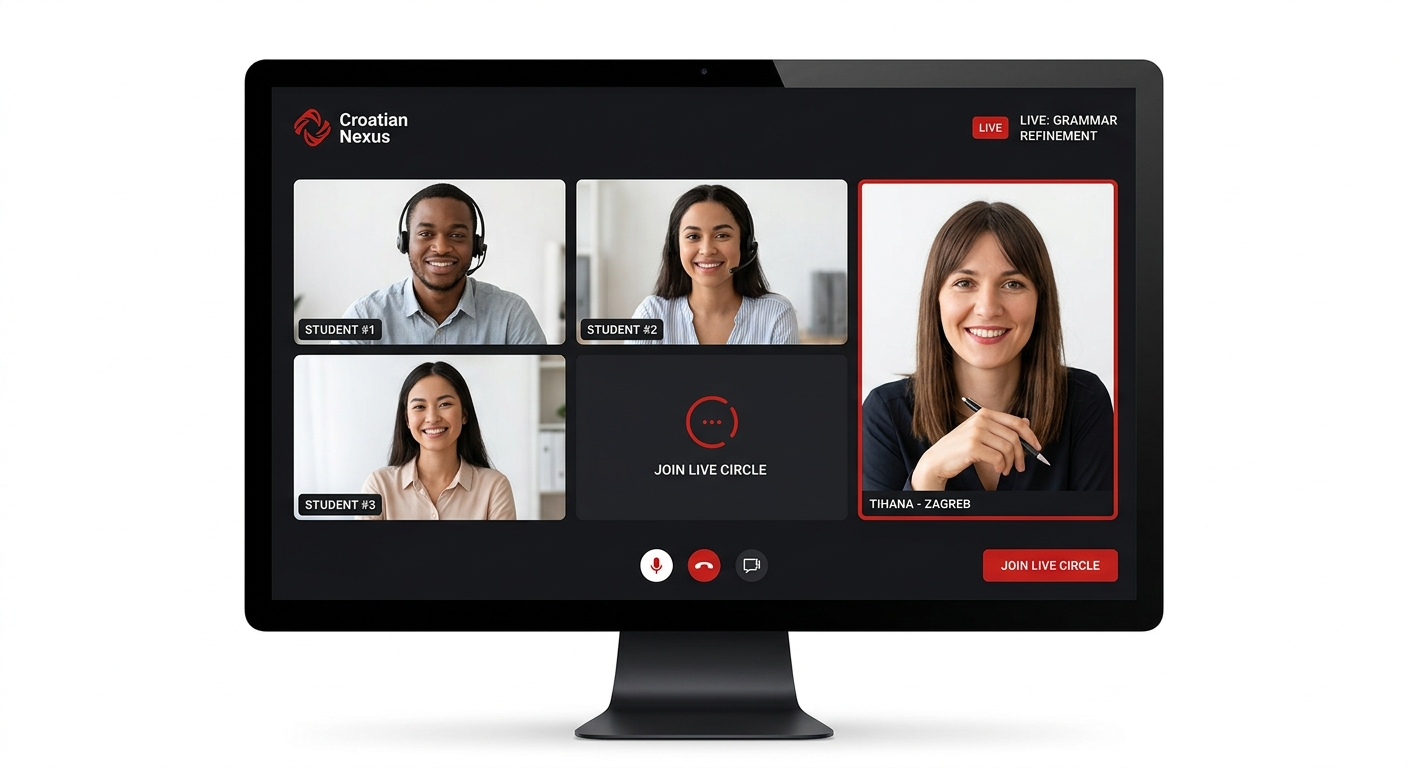
Sixty minutes each, live, on Tuesdays at 20:00 and Thursdays at 08:00, Zagreb time. Real conversation, with gentle correction as you speak. Every session is recorded and kept in your private portal for the weeks when life gets in the way.
The monthly cultural syllabus
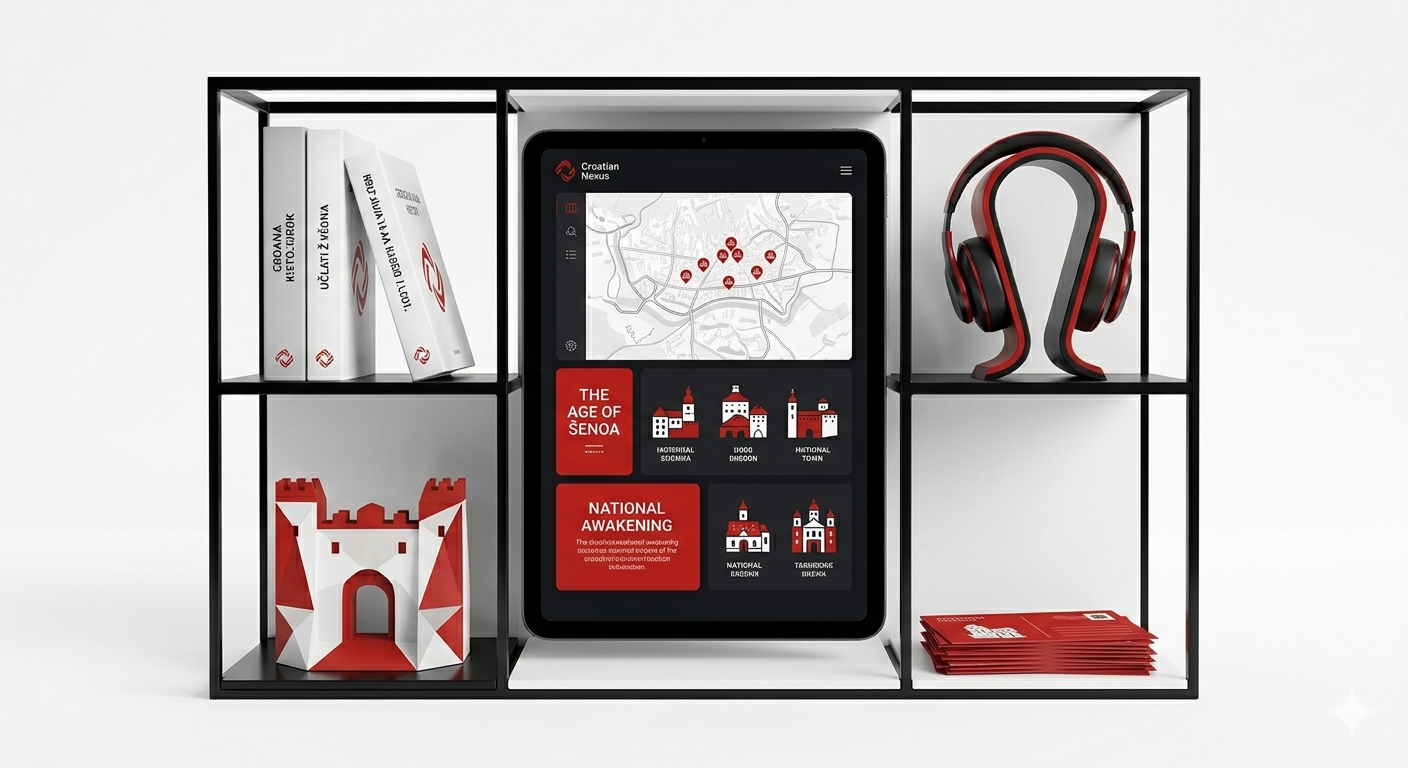
The whole circle works around a single theme, week by week, through real texts and historical documents, with the grammar living inside them and never on its own. The themes so far have been the age of Šenoa and the national awakening, the history and heritage of Šibenik, the waves of Croatian emigration, Croatian women, the skills of everyday life, professions, great Croatian love stories, and the festivals of Croatia.
Ten language exercises
Ten exercises a month in grammar and vocabulary, built from the month's own texts: fill-ins and crosswords, dialogues and postcards, a case detective, a letter to answer. They keep the reading and the talking firmly underneath you.
Pronunciation Lab and Song of the Month
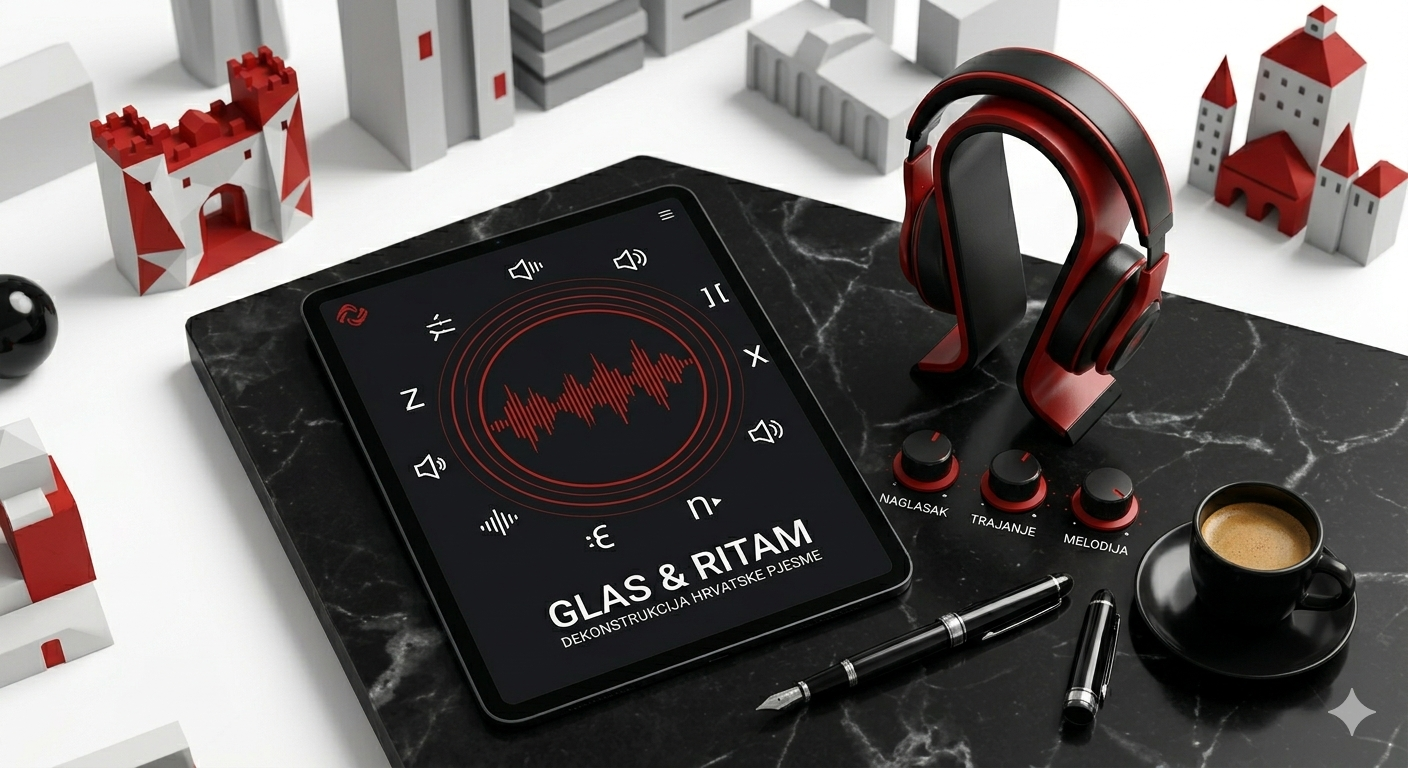
To belong in a language you need its music, the rhythm and stress and melody that textbooks rarely reach. Every lesson has its audio for you to work with, and each month we take a Croatian song apart, until the pitch and flow of native speech begin to settle in your ear.
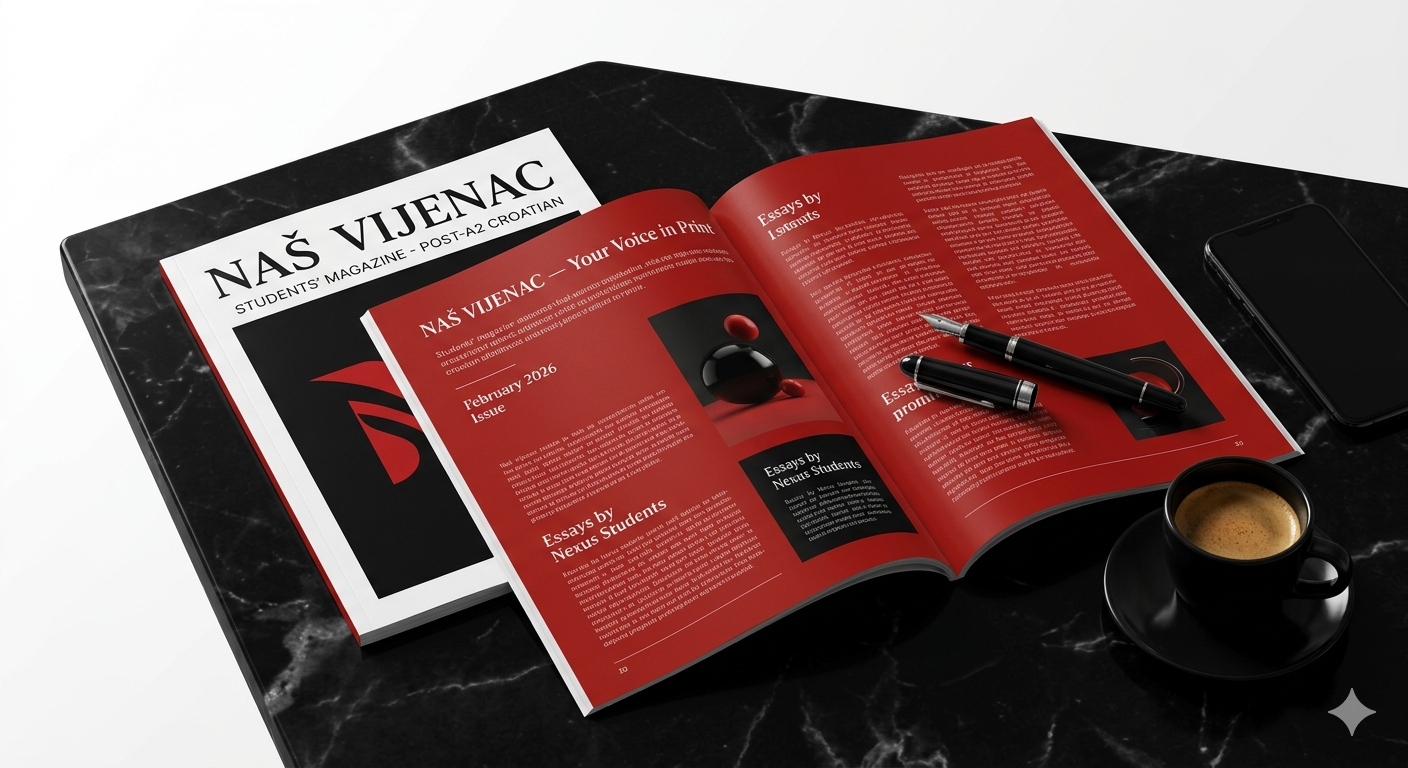
Naš Vijenac, your voice in print
Each week of the month has a topic to write on. I edit every piece myself, and together they make up our digital magazine, written in Croatian by the circle. Not an exercise. A real body of work.
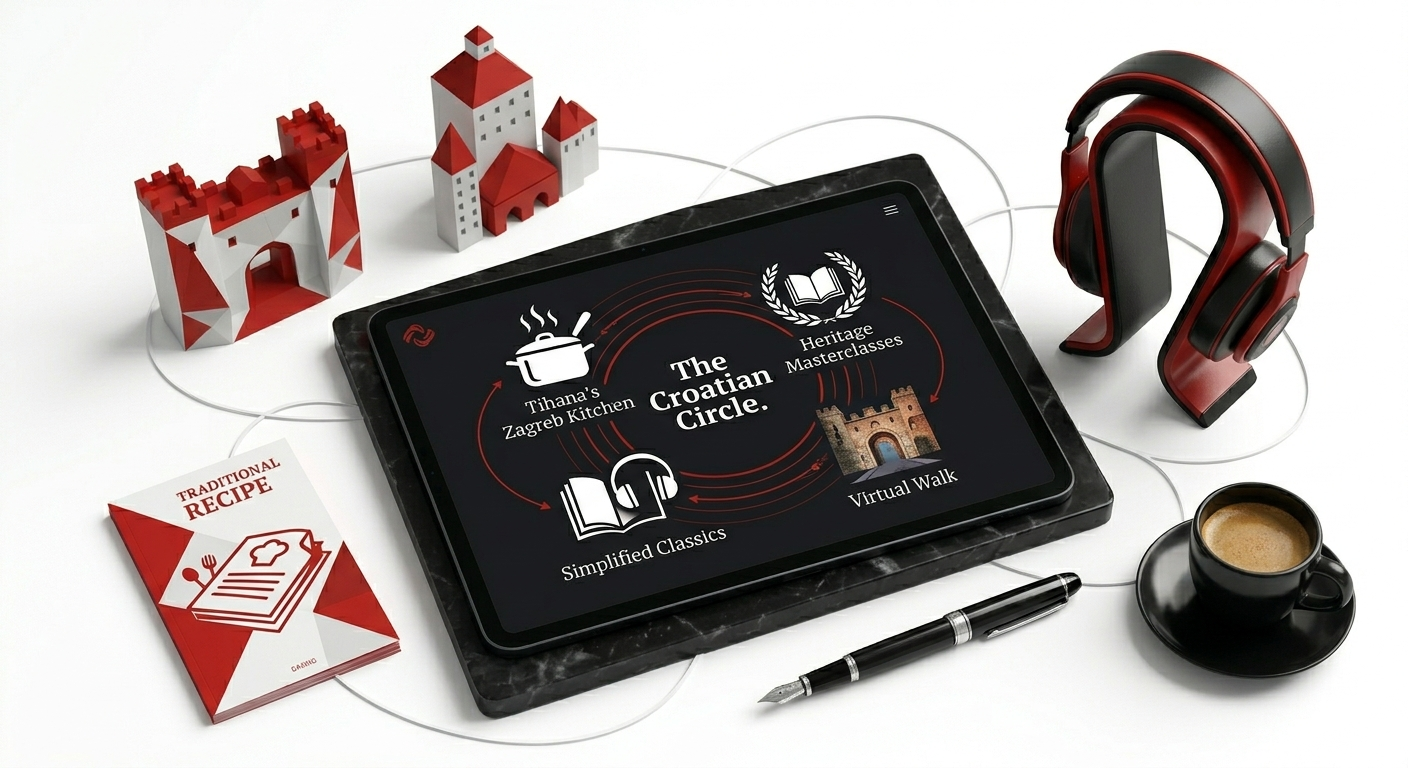
The Croatian Circle
One library, four rooms: a private digital campus away from social media, where Croatian carries on between sessions. It is the same Circle that belongs to the Quadrant.
Hall of Minds
Masterclasses on how adults actually learn a language: memory, strategy, mindset.
Croatian Cinema
Croatian writers, painters, towns and museums, filmed and narrated by me.
Croatian Classics Library
Croatian classics adapted to A2, as downloadable PDFs and as audio I read aloud, so you can practise pronunciation against them.
Student Canteen
Croatian recipes in Croatian and English, used to practise the imperative, absorb new vocabulary, and attach language to taste and memory rather than a page.
Croatian Voice Kickstart
Croatian Voice Kickstart is the pronunciation course I have taught for years. It begins where the voice begins, and every member of Nexus gets it as part of the package.
The Croatian alphabet, the vowels and the consonants, taken slowly and heard clearly, so that the letters stop being guesses.
Everyday words, basic phrases, numbers and the days of the week, spoken the way they are said and not the way they are spelled.
Intonation and stress, the linking of sounds from one word to the next, and a stretch of listening and imitation, which is where an accent starts to change.
A final pronunciation challenge, so that you hear yourself at the end of the course and not only at the beginning.
You will not just speak Croatian. You will write it.
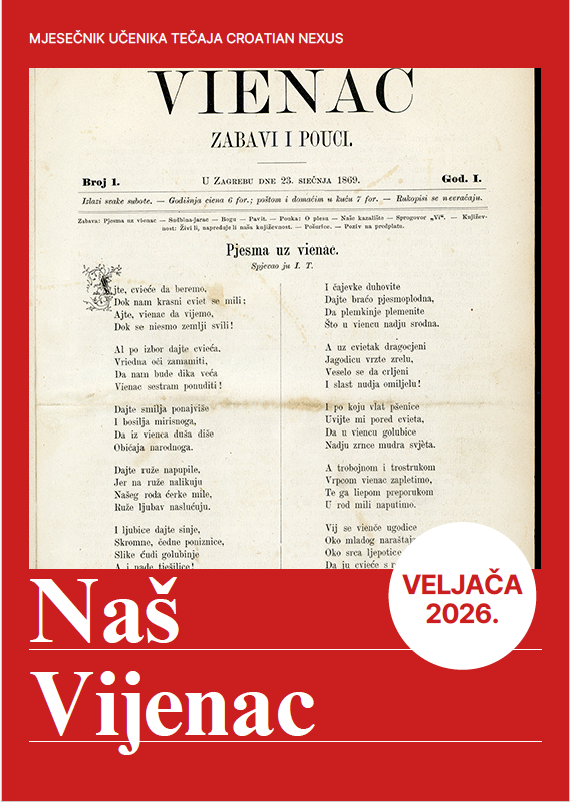
Every month the members of the circle produce a magazine, entirely in Croatian, written, edited and published together. The February 2026 issue holds essays on why Croatian matters, stories of cities divided between two countries, and reflections on language as memory and belonging.
Its contributors were a high-school teacher in the United States reconnecting with his roots on Brač, a Canadian educator with family ties to Dalmatia, an accountant from Vancouver with roots in Šumber, in Istria, and her husband, an engineer building a life between Canada and Istria. Four people, four stories, one language.
This is what Nexus makes. Not a certificate. A body of work in the language you are claiming.
Who this is for
You are past A2. The seven cases, the present, past and future, and the imperative feel solid in real conversation, not perfect but solid, and you want to move from correct to Croatian. You are ready to meet literature, history and culture, and not only vocabulary lists.
Many heritage speakers grew up hearing Croatian at home and feel they understand it naturally. Hearing is not the same as using, and if the Instrumental case or the Future tense still stop you mid-sentence, the room will move too fast for you. The Croatian Quadrant™ is where to build that foundation first. If conversation is all you want, look at Croatian Colloquium™.
4 to 8 January
Five evenings at 20:00 Zagreb time, live and free. Everything about the year is explained there in detail: what each week holds, how it is paid, and whether it is right for you.
- Nothing is charged now. Putting your name down only holds a place.
- Enrolment opens after Campus Week, and you will get one email when it does.
Keep me a place
Put your name down and a place is held for you. That is all this does. There is no payment, no commitment, and no flood of email: one note when enrolment opens, and the Saturday Letter in between.