Want to Learn Croatian to Read Something Special? Explore the Extraordinary Life and Works of Dragojla Jarnević
Ja ne mogu biti samo predmet za uživanje, ako nisam kraj toga i osoba za štovati!
(I cannot be merely an object of pleasure, if I am not also a person to be respected!)
-- Dragojla Jarnević

A journey to Krašić valley
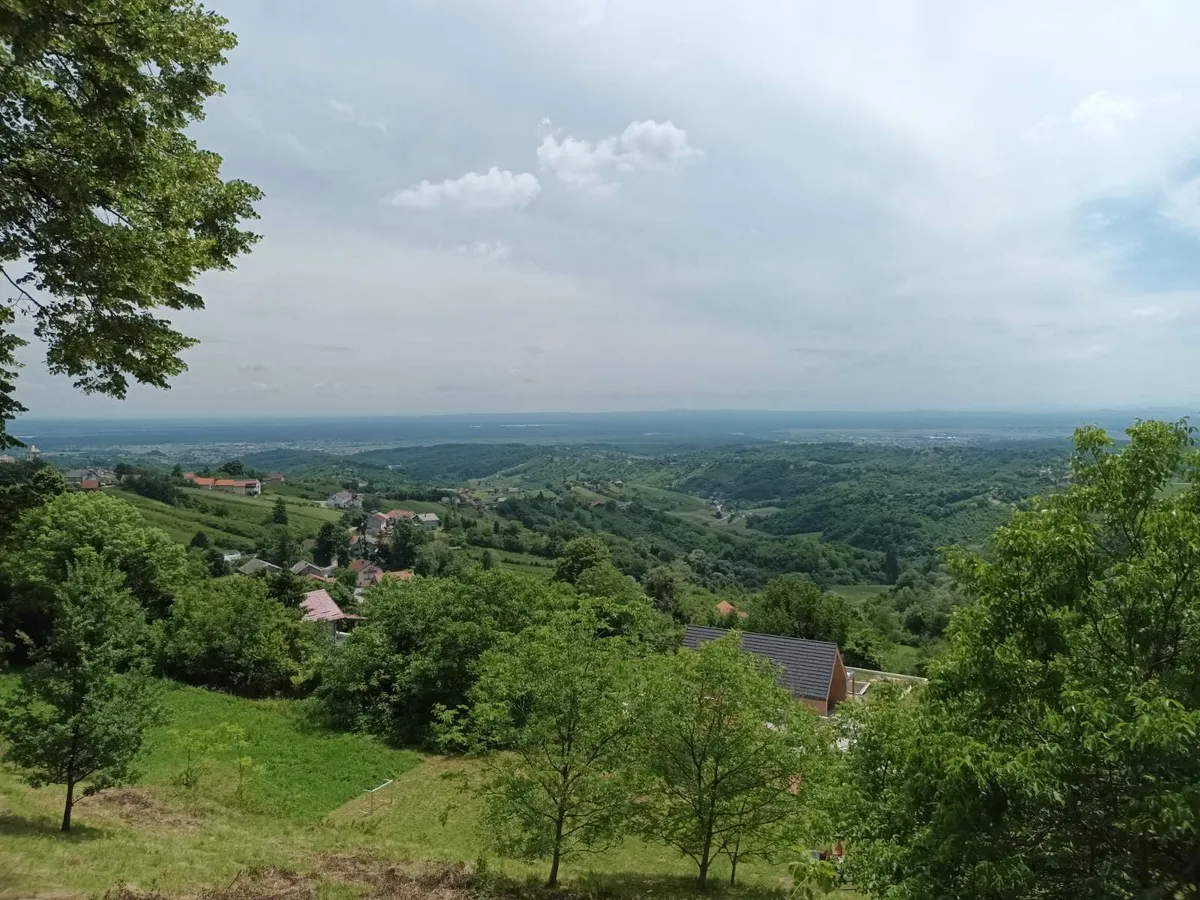
I walk up the hilly path on the Mount Plešivica. It is a gorgeous day in late spring. I am bathing in sunlight. Still not too warm. Halfway up the road I look down at the hills covered with vineyards, dotted with little houses. It is Krašić valley. Dragojla immediately comes to mind. This is Dragojla’s country.
Discovering Dragojla
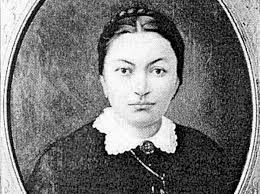
Dragojla Jarnević (1812–1875) stands as a seminal figure in 19th-century Croatian literature and feminist thought. She was born in Karlovac, Croatia, then an Illyrian province under the French Empire. In Karlovac little Dragojla attended a German-language primary school. She never spoke Croatian. And then in 1839, she moved to Graz to learn the dress and hat making trade. There she was influenced by Ivan Trnski, Croatian poet and nationalist supporter so she began learning Croatian and started writing nationalist poetry.
Upon her return to Karlovac in 1840, she supported herself through dressmaking while publishing her poetry and short stories in nationalist journals such as Danica Ilirska (The Illyrian Morning Star) and Kolo (The Circle). During this period, Dragojla Jarnević transitioned from writing in German to Croatian in her Journal:
Sa 1841. godinom sam počela na hrvatskom pisati. Počela sam povêstice, pêsme i igrokaze pisati, ali mi neide za rukom; još nisam čversta u jeziku i velike pogrêške dêlam. Ja volim ilirske knjige uzeti pak iz njih e što god koristnog naučiti. Mučim se š njima to je istina, ali ja ipak napredujem.„(1)

A Revolutionary Journal
This leads us to that special thing I want to tell you about! A real treat! A gem!
This meticulously kept Journal, spanning from 1833 to 1874, covers key aspects of nineteenth-century female identity formation in Croatia, such as love, body, shame, illness, death, yearning, flirtation, marriage, upbringing while also including numerous cultural, historical, and political references and her reasoning why she writes. It may not be Virginia Woolf’s A Room of One’s Own, but it is perhaps even more revolutionary considering the context of time and space it was written:
Jedina ova moja zabava sa pisanjem, odvraća moje misli od kojekakovijeh stvarih koje bi me inače verlo uznemiravale. Neumorna poslenost svake struke lieči serdce moje, i za sve izgubljene nade života moga, su mi moja mala dielca jedina naknada. Malo je! Ali ipak je niešto, i to je moja utieha, da nisam baš moj život propustila. Čudne osude za mene! (2)
This is what Jarnević thought about life and marriage in mid-nineteenth century in Croatia:
Pa da se ja vežem za ovakova kakova surovnjaka, da mu postanem ženom, ropkinjom? Ja koja sam danomice nastojala da se usavršim u svakoj struci što na ženu spada, koja sam vrstan bila neodvisan život od muža si skrojiti, ja da idem za muž samo zato da budem ženom?! (3)
Or
Mužkarcem ne uzvraćam ljubavi jerbo je ne žele, oni bi uživali a ne ljubili... Moje tielo ne bude nikom na užitak, razbluda mi jošte ne zavlada srdcem... Ja preziravam mekoputnosti 18 užitak i ne budem se za orudje jednoga muža nikada u ovom obziru upotriebiti dala. Moja se duša samo od ove misli jurve uzbuni, da bi moje tielo ikada kakovomu mužu za nasladje služiti moglo... (4)
Challenging Societal Norms
Her exploration of personal identity and bodily autonomy cements her proto-feminist status. In mid-nineteenth century Jarnević candidly discusses issues such as love, flirtation, and marriage, often challenging societal norms and expectations. Her reflections on body and shame reveal a critical awareness of the societal pressures imposed on women regarding their appearance and behavior. By articulating these experiences, Jarnević provides a voice to the often-silenced struggles of women, fostering a sense of solidarity and shared identity among her readers.
Blažena ona duša, koja nalazi svu svoju sreću u trapljenju, te se ovako nada dopadati se Bogu i milost njegovu zaslužiti; nada se za dušu ono, što ovde telo strada, i uzradovati se onamo kamo suze ne pripadaju. –Da! Da ja ne bi imala nade za onaj drugi svet, kojega nam je Isus obećao, i ja bi zlotvornicom postala; zatajila bi sve što je sveto i božanstveno, i u muki moje duše i nevolji tela blaznila proti svemu.. Ljubila jesam! O, ljubila sam, kako nikakova duše nije kadra ljubiti i moj život za ljubav zastavila; al pečal mi donese najčišće i najsvetije čuvstvo, i niti sata nikakovog užitka... (5)
Education and Economic Independence
One of the most striking aspects of Jarnević’s journal is her focus on education and economic independence which was revolutionary for her time. By educating girls, Jarnević laid the groundwork for future generations to break free from societal constraints and pursue their aspirations.
...i doista da se sve više volja kod mene gubi, ikada za muža poći; ma neka mi još i koliko tko govorio, da ovako kao dievojka u maloj česti stojim, i da tek kroza supruga ugledna postanem. Voljim kroza cio život dievojka ostati, nego jaram nositi, koji bi me smertno tištao! Supruga jedna nečudoredna, svojevoljna i bog zna kakova čovieka postati, me serce doista ne vuče! Ovako mi je moj ležaj svakako snosii, nego bi mi bio pod gospodujućom rukom kakovog kodj surovnjaka. Za putnost budem se skerbila, da verhruke nada mnom nedobie, a za moje življenje si uzderžati, sriedstvah mi nikada ne manjka. U mladjih mojih dnevih biah kadrasvakom poželenju sercauzdu nametnuti, i tako nedvojim da se i svaki dan sada studenie roneća kerv umiriti dala nebude; - voljim se ovako oskudujući uništiti, nego da me ćutjenje uništi, da sam samo predmet marvinjskih poželenjah jednog muža, koj se isto tako u mojem kao što i u objatju najrazuzdanie razbludnice nasladi; i kojemu nije ćutjenje srca sveto, niti čudoredna snaga poznata; već koj samo sliepoj razbludi sliedi, ako se i ole u njemu pojavi. JA NEMOGU BITI SAMO PREDMET ZA UŽIVANJE, AKO NISAM KRAJ TOGA I OSOBA ZA ŠTOVATI!
Namely, to gain economic independence herself, Jarnević ran a private school for girls and taught village children in Pribić and Krašić from 1849 to 1853.
A Tribute to Dragojla
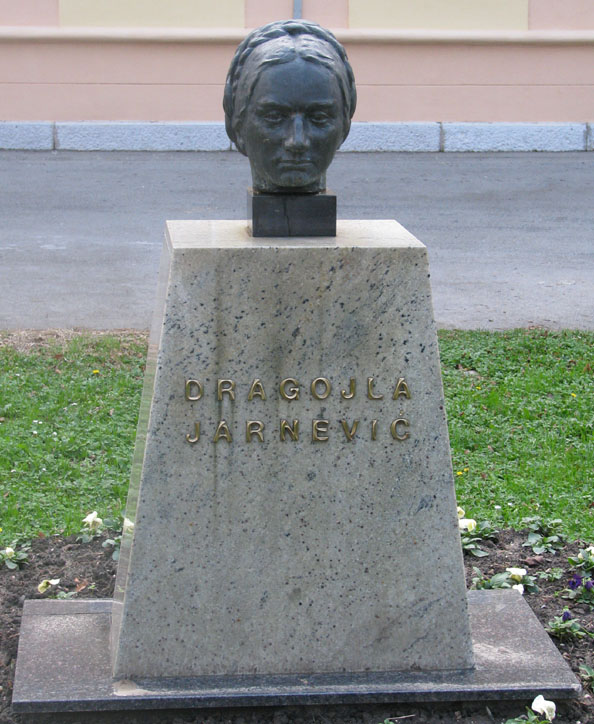
That is the reason I am now standing at the foothills of Plešivica, looking down on Krašić valley and of all the people and events associated with this valley, it is Dragojla Jarnević that comes to mind. She walked the picturesque paths of this place every morning in the effort to educate girls so that they would have more opportunities to realise their potential.
Thank you, Ms. Jarnević, I stand on your shoulders, too. I would never be where I am now if it weren’t for you and the likes of you. I bow my head before you.
Continuing Her Legacy
And Jarnević did not stop there. She also published numerous sentimental and adventure stories in literary magazines like Neven (Marigold), Leptir (The Butterfly), Glasonoša (The Messenger), and Naše gore list (Fellow Countrymen) over the next two decades. After returning to Karlovac in 1866, she engaged with prominent members of the Croatian teachers’ movement, including D. Trstenjak, S. Fabković, and J. Tomić. With no specialized women’s magazines available, she contributed articles on pedagogical issues to various magazines, delivered lectures on the subject, and participated in the Croatian Pedagogical and Literary Society, becoming its first female member in 1872.
Her novel Dva pira, serialized in the nationalist Domobran (Home Guard) in 1864, stands as only the second modern Croatian novel. Despite being written without a literary tradition to follow, it anticipates the narrative techniques of August Šenoa (1838-1881), the leading figure of the Croatian novel. If you wish to read more about it have a look at the article about the novel I have written years ago in English language:
Nationalist Thought and Feminism
Lastly, Jarnević’s journal reflects her deep engagement with nationalist thought. Jarnević envisioned a nation where both men and women could contribute to its cultural and intellectual flourishing. Her writings thus represent an early intersection of feminist and nationalist ideologies, advocating for a society that values and includes the contributions of women.
Govorili vi i još toli prezirno o mojoj domovini, mene od nje neodvratite, i vjerujte, da ću se uvjek ponašati da sam hrvatsko diete. Ako je moja domovina i uboga, ona ipak obiluje svimi prirodnimi darovi, i malo će se naći Hrvata, koji bi joj se mogli iznevjeriti! (6)
Join the Journey
So do you want to know what she is saying here? Want to know how a woman in mid-ninteenth century not only taught herself Croatian in her thirties, but began writing literature in it? Want to read her Journal some day?
It is possible. Join me for my Croatian language and culture course and I will help you make first steps towards that goal. And if you are really determined I will help you all the way. Stick with me and I will hold your hand all along the way. And it will be worth it. Because, not just Dragojla, but so many others, who string words so beautifully in Croatian are waiting for you.
Come, take the first step. Join my Croatian language and culture course.
P.S. Oh, did you think I was going to leave you without translations (not that it is difficult to get them these days). Well, I would never do that! Here’s a little peak into what you’re missing by not reading Croatian:
(1) With the year 1841, I began writing in Croatian. I started writing short stories, poems, and plays, but I am not very successful; I am still not proficient in the language and make many mistakes. I like to take Illyrian books and learn something useful from them. I struggle with them, it is true, but I am nevertheless making progress.
(2) This writing, my only diversion, keeps my mind away from various things that would otherwise greatly trouble me. Tireless work in every field heals my heart, and for all the lost hopes of my life, my little works are my only compensation. It is little! But still, it is something, and it is my solace that I have not completely wasted my life. Strange judgments for me!
(3) And should I bind myself to such a brute, to become his wife, his slave? I, who have daily strived to perfect myself in every field befitting a woman, who have been capable of crafting an independent life apart from a husband, should I marry just to become a wife?!
(4) I do not return love to men because they do not desire it; they would enjoy but not love... My body will not be anyone's pleasure, lust has not yet taken over my heart... I despise indulgence and pleasure, and I will never allow myself to be used as an instrument of pleasure for a husband. My soul is already disturbed by the mere thought that my body could ever serve a husband for his enjoyment...
(5) Blessed is the soul that finds all its happiness in suffering, thus hoping to please God and earn His grace; it hopes for the soul what the body endures here, and rejoices in a place where tears do not belong. Yes! If I had no hope for the other world that Jesus promised us, I would have become a wrongdoer; I would have denied all that is sacred and divine, and in the torment of my soul and the misery of my body, I would have raged against everything... I have loved! Oh, I have loved, as no soul is capable of loving, and I risked my life for love; but sorrow brought me the purest and most sacred feeling, without even an hour of pleasure...
(6) ...and indeed, the more I think about it, the more my desire to ever marry fades away; no matter how much people tell me that as a single woman I hold a low position, and that only through marriage will I gain respect. I prefer to remain single my whole life rather than carry a yoke that would oppress me to death! Becoming the wife of an immoral, willful, and God knows what kind of man does not appeal to my heart at all! It is better for me to bear my current burdens than to be under the dominant hand of some brute. I will take care of my needs so that necessity does not overpower me, and I will always have the means to sustain myself. In my younger days, I was able to control every desire of my heart, and so I do not doubt that my cooling blood will remain calm now; I prefer to destroy myself in this state of want rather than be destroyed by the thought of being just an object of animalistic desires for a husband, who finds equal pleasure in my arms as in those of the most debauched woman; a man to whom the feelings of the heart are not sacred, nor moral strength known; who follows only blind lust whenever it appears in him. I CANNOT BE JUST AN OBJECT OF PLEASURE IF I AM NOT ALSO A PERSON TO BE RESPECTED!
(6) You may speak disdainfully about my homeland, but you will not turn me away from it, and believe me, I will always conduct myself as a Croatian child. Even if my homeland is poor, it is still rich in all natural gifts, and you will find few Croatians who could betray it.
Join me, let me show you how beautiful both, Croatia and Croatian language are.
*Dragojla Jarnević: Dnevnik, Karlovac: Matica hrvatska, 2000. Edited by Irena Lukšić, Translated from German by Milan Kruhek
Tihana Klepač is an Associate Professor at the University of Zagreb's Department of English and the founder of TalkTime Croatian. She teaches the Croatian Quadrant™, a structured, culturally immersive course designed to help learners stop translating and start thinking in Croatian. Find out more at: talktimecro.com.


